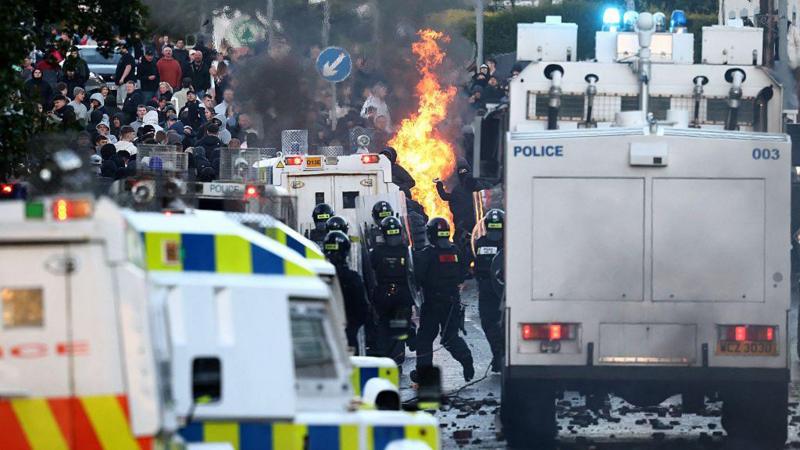
What we know about how Northern Ireland's riots were organised
Summary
Three nights of violent riots happened in Northern Ireland after a knife attack in Belfast. Social media played a big role in spreading information and organizing protests, some of which turned violent, including attacks on homes and police. The police said they found no evidence that the violence was planned by loyalist paramilitary groups but confirmed online coordination.Key Facts
- The violence began after a knife attack in Belfast, with a Sudanese man charged with attempted murder.
- Videos and posts about the attack spread quickly on Facebook, X (formerly Twitter), and TikTok.
- Protests called for stricter immigration controls, some peaceful, others violent with masked participants.
- Social media was used to share protest times, locations, and even lists of homes to target.
- Police expressed concern that the online sharing of addresses put residents’ lives at risk.
- Most violent incidents happened in mainly unionist areas, though the attack was in a nationalist area.
- The Police Service of Northern Ireland found no clear involvement from loyalist paramilitary groups.
- Communications regulator Ofcom said some violence appeared to be incited online and is monitoring the situation.
Read the Full Article
This is a fact-based summary from The Actual News. Click below to read the complete story directly from the original source.