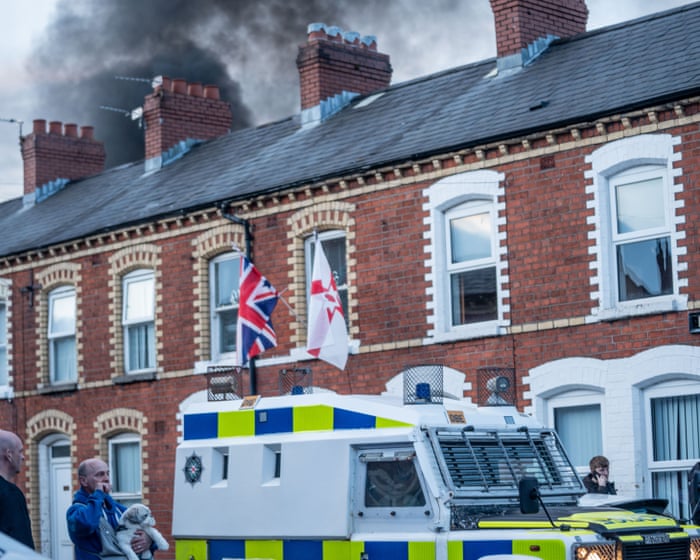
Belfast riots trigger renewed scrutiny over loyalist paramilitary influence
Summary
Violence recently broke out in Northern Ireland, sparked by a knife attack in a nationalist area but occurring mainly in loyalist neighborhoods. The unrest highlights the ongoing presence and influence of loyalist paramilitary groups, which have not fully disbanded despite peace efforts.Key Facts
- The knife attack that triggered the violence happened in a nationalist area but the riots mostly occurred in loyalist communities.
- Loyalist paramilitary groups like the Ulster Volunteer Force (UVF) and Ulster Defence Association (UDA) still exist in Northern Ireland, with estimates of about 12,500 members in 2020, many inactive.
- These groups have split into sub-groups, some involved in criminal activities like drug dealing and extortion.
- Police found no proof that paramilitaries planned the recent violence, but some leaders chose to stay neutral rather than stop the riots.
- Loyalist groups are under pressure to disband but have stopped intervening in community conflicts.
- Some local officials suggest engaging with paramilitaries to control violence, but experts warn this could mean accepting their history of violence and control over communities.
- The unrest began after a refugee from Sudan was charged with attempted murder following a knife attack on Stephen Ogilvie.
- After several days, the disturbances have decreased but tensions remain.
Read the Full Article
This is a fact-based summary from The Actual News. Click below to read the complete story directly from the original source.