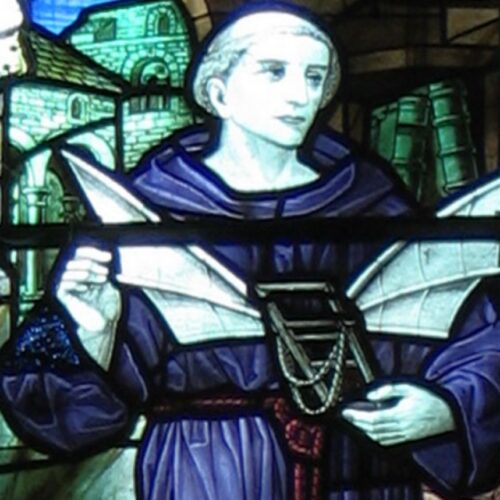
Did a medieval flying monk spot Halley's comet, twice? It's complicated
Summary
A Benedictine monk named Eilmer, who lived in the early 1000s in England, attempted one of the first recorded gliding flights using handmade wings. Historians debate whether Eilmer actually saw Halley's comet twice—once in 1066 and possibly again as a child in 989—or if he saw a different comet in 1018, affecting estimates of his age and achievements.Key Facts
- Eilmer jumped from a 150-foot tower wearing wings made from willow wood and cloth.
- He glided about 600 feet before falling and breaking both legs.
- The story comes from 12th-century historian William of Malmesbury's writing around 1125.
- William says Eilmer saw Halley’s comet in 1066 and had seen it once before, which some take to be the comet’s 989 appearance.
- Scholar James Aitcheson suggests Eilmer may have seen a different comet in 1018 instead of 989.
- This later date changes Eilmer’s possible birth year to early 1010s and challenges ideas about early knowledge of Halley’s comet cycles.
- It’s unclear if medieval observers could tell different comets apart.
- Aitcheson notes Eilmer might have passed his story personally to William if he lived into his 90s.
Read the Full Article
This is a fact-based summary from The Actual News. Click below to read the complete story directly from the original source.