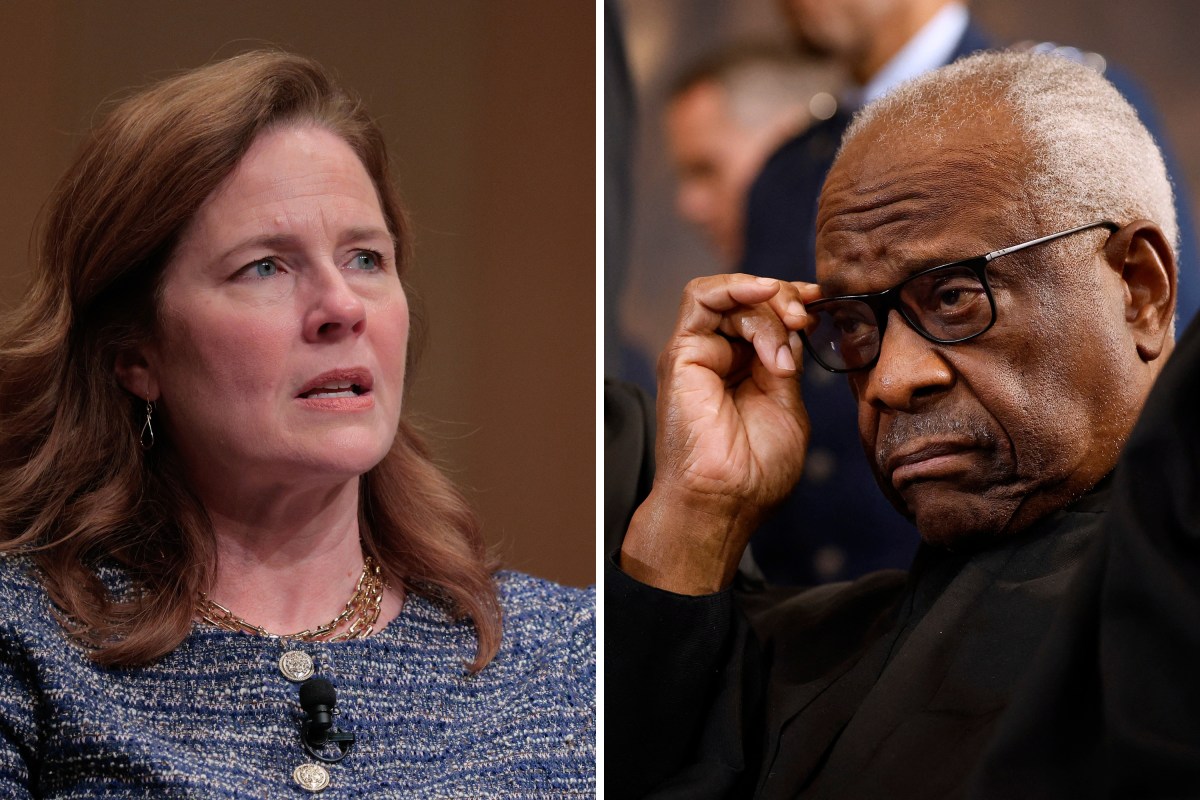
Amy Coney Barrett Writes SCOTUS Opinion to Directly Counter Clarence Thomas
Summary
The Supreme Court ruled on a criminal case about whether people who accept plea deals and give up the right to appeal can still challenge some parts of their sentences. Justice Amy Coney Barrett wrote separately to disagree with Justice Clarence Thomas, showing a rare split among conservative justices.Key Facts
- The case, Hunter v. United States, involved a man who pleaded guilty to fraud and gave up his right to appeal his sentence.
- He wanted to challenge a court order requiring him to take mental health medication during supervised release.
- Lower courts said the appeal waiver stopped him from challenging the sentence, but the Supreme Court asked whether there should be limits.
- The Court decided that appeal waivers usually hold, but not if enforcing them would cause a serious injustice.
- Justice Barrett agreed with the ruling but wrote separately to reject Justice Thomas’ strict view that waivers should always be enforced.
- Barrett said courts have long recognized that some rights cannot be waived if it damages the justice system’s credibility.
- Thomas disagreed, saying defendants must stick to their plea deal promises, or it could weaken the legal system.
- Barrett’s separate opinion shows a split in conservative justices on how the court should handle criminal justice rules.
Read the Full Article
This is a fact-based summary from The Actual News. Click below to read the complete story directly from the original source.