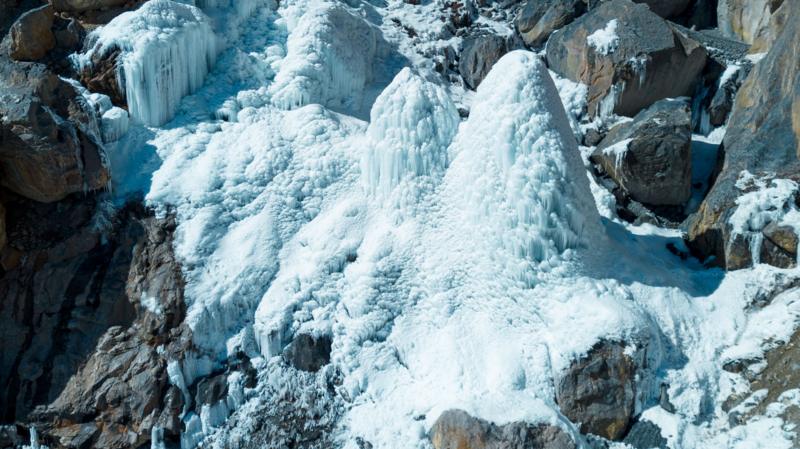
The artificial ice pyramids saving India's mountain villages
Summary
In the Himalayan region of Ladakh, farmers face water shortages because small glaciers that once supplied water have disappeared due to global warming. To solve this, people created artificial ice towers called ice stupas that store winter water as ice and then melt it in spring to irrigate crops. A new tech system, called the Automated Ice Reservoir (AIR), uses computers and weather data to control the freezing process more efficiently.Key Facts
- Himalayan glaciers have shrunk, reducing water availability for mountain farmers in Ladakh.
- The growing season is short, so farmers need water in early spring for their crops.
- Traditional ice stupas are frozen water towers made by spraying water into cold air to form ice piles.
- Managing these ice stupas was difficult because pipes could freeze and break in very cold weather.
- Farmers had to monitor and fix the system constantly, often working in freezing conditions.
- A company called Acres of Ice developed an Automated Ice Reservoir (AIR) system to improve ice stupa efficiency.
- The AIR system uses computer controls and weather sensors to adjust water flow based on temperature changes.
- The system is powered by solar panels and batteries, allowing better management of ice creation and water supply.
Read the Full Article
This is a fact-based summary from The Actual News. Click below to read the complete story directly from the original source.