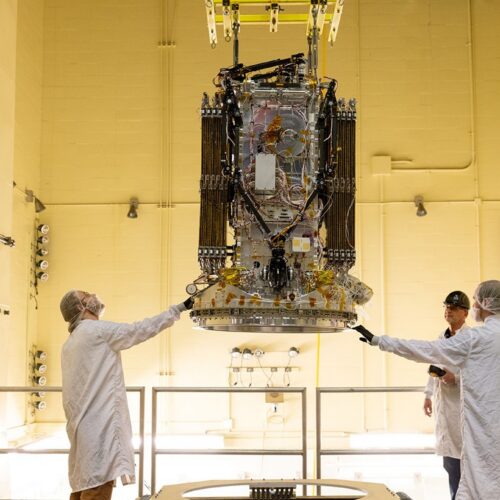
A bold satellite rescue mission came together in record time, but will it work?
Summary
NASA asked three companies to build a small satellite to save the aging Swift space observatory from falling back to Earth. Katalyst Space Technologies won the $30 million contract and built a spacecraft called Link, which will grab Swift and boost its orbit to keep it working. The mission had to be done quickly because Swift is losing altitude fast due to atmospheric drag.Key Facts
- Swift is a space observatory launched in 2004 to detect gamma-ray bursts, powerful explosions in space.
- Swift has no thrusters to maintain its orbit and is gradually losing altitude because of atmospheric drag.
- The Sun’s activity has caused Earth’s atmosphere to swell, increasing drag on satellites like Swift.
- NASA gave Katalyst Space Technologies less than a year and a $30 million budget to design and build a rescue satellite.
- Katalyst’s spacecraft, named Link, will attach to Swift using robotic arms and push it back to a higher, safer orbit.
- Swift is expected to fall below 186 miles altitude by October, after which it will be too low for the rescue mission.
- Katalyst has completed the Link spacecraft and is preparing it for launch to meet the tight deadline.
- This mission is the first attempt to extend the life of a satellite using a capturing and servicing spacecraft.
Read the Full Article
This is a fact-based summary from The Actual News. Click below to read the complete story directly from the original source.