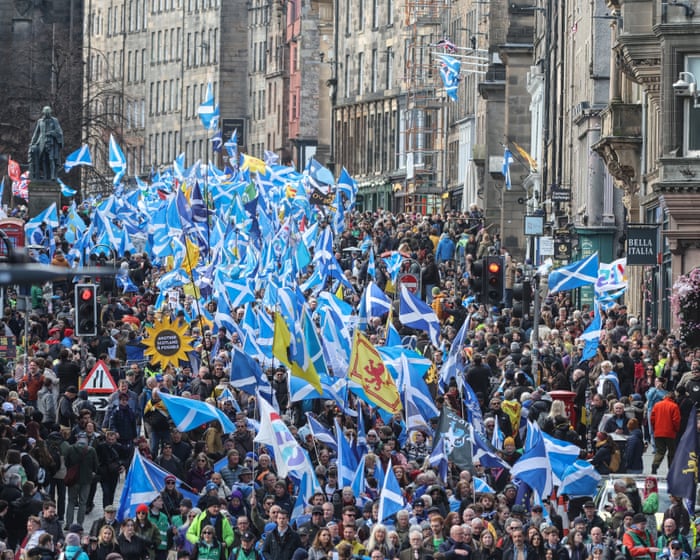
‘This changes everything’: how Brexit altered Scotland’s political landscape
Summary
The Brexit vote in 2016 increased support for Scottish independence because most Scots wanted to remain in the EU, but the UK left anyway. Since then, political events and economic concerns have affected support for independence, which has risen and fallen but remains near 50%.Key Facts
- In 2016, 62% of Scottish voters chose to stay in the EU, but the UK overall voted to leave.
- The Brexit decision strengthened the case for Scottish independence for many people.
- Support for independence is currently around 50%, with some polls showing up to 55%.
- After Brexit, political leaders like Nicola Sturgeon called for a second independence referendum.
- The Scottish National Party (SNP) lost seats and vote share in the 2017 general election partly due to pushing for independence again.
- Support for independence dropped below 40% in 2017 but has not reached the expected high of over 60%.
- Political crises such as Brexit’s aftermath, the COVID-19 pandemic, and global conflicts have influenced voters’ priorities.
- Unionist parties like the Scottish Conservatives and Labour have gained ground since 2017.
Read the Full Article
This is a fact-based summary from The Actual News. Click below to read the complete story directly from the original source.