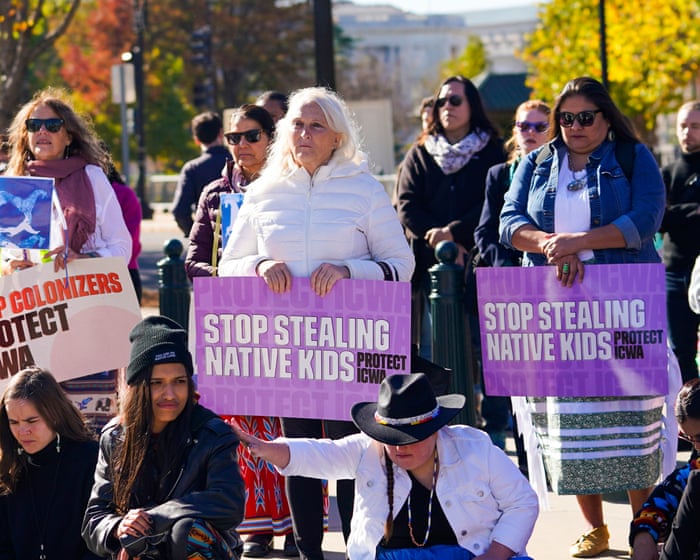
‘Native children belong in Native communities’: tribes decry New Mexico drug-exposed newborn rule
Summary
New Mexico's governor issued a rule requiring child welfare to seek custody of all newborns exposed to drugs or alcohol before birth. This rule faces criticism from Native American tribes and advocates who say it conflicts with laws protecting tribal rights and can harm families by separating children from their communities unnecessarily.Key Facts
- New Mexico’s governor Michelle Lujan Grisham directed child welfare to take custody of drug or alcohol-exposed newborns.
- The rule raised concerns about what counts as drug exposure, including medications for addiction treatment and medical use like fentanyl.
- The directive appears to conflict with tribal sovereignty laws requiring tribes be notified about child welfare cases involving Native children.
- Nine Native tribes filed a lawsuit against the rule, arguing it ignores state and federal protections for Native families.
- The state supreme court allowed the case to proceed but did not pause the rule.
- A law passed earlier in New Mexico gave healthcare, not child welfare, authority to develop rules for treating drug use in pregnancy, which the new directive contradicts.
- Medical experts recommend keeping families together and providing support for newborns exposed to substances rather than immediate removal.
- The Indian Child Welfare Act requires efforts to keep Native children in their communities, but many states struggle to comply fully, including New Mexico.
Read the Full Article
This is a fact-based summary from The Actual News. Click below to read the complete story directly from the original source.