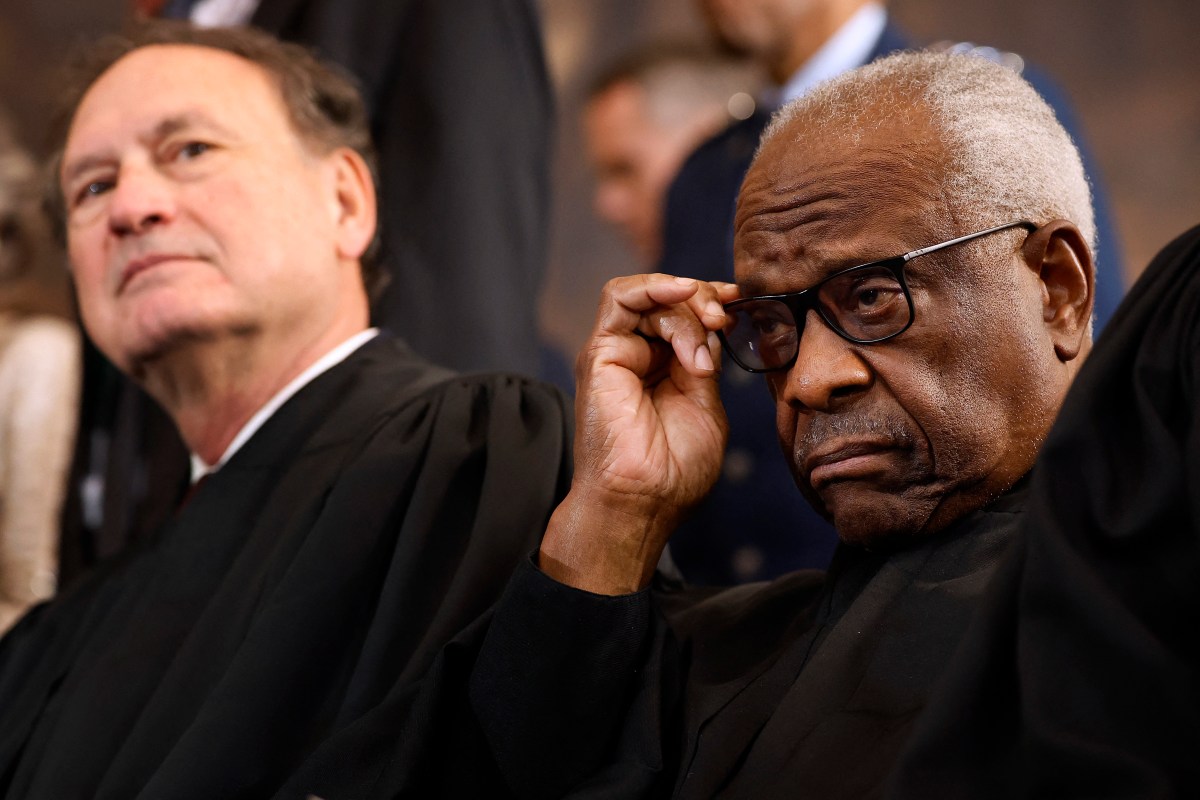
Alito, Thomas Issue Dissent in Supreme Court Decision Linked to Racial Test
Summary
The U.S. Supreme Court decided not to review a case about when a police encounter becomes a seizure under the Fourth Amendment, leaving in place a Washington, D.C. court ruling that considers a person's race in that decision. Justices Alito and Thomas disagreed, saying this raises important constitutional questions about treating people differently based on race.Key Facts
- The case is United States v. Donte J. Carter, involving police encounters and the Fourth Amendment protection against unreasonable searches and seizures.
- The D.C. Court of Appeals ruled that courts should consider how a reasonable Black person might perceive a police encounter when deciding if a seizure occurred.
- This ruling differs from past Supreme Court decisions that use a general "reasonable person" standard without considering race.
- The specific incident involved police in D.C. asking Carter if he was armed and adjusting his clothing, leading to the discovery of a stolen gun.
- Carter argued he was seized before police had enough suspicion to stop him legally.
- The Supreme Court declined to hear the case, leaving the D.C. ruling in place.
- Justice Alito, joined by Justice Thomas, dissented, arguing that factoring race into legal standards about seizures conflicts with constitutional principles.
- The debate centers on whether the law should consider different experiences of police encounters based on race or keep a uniform standard for all people.
Read the Full Article
This is a fact-based summary from The Actual News. Click below to read the complete story directly from the original source.