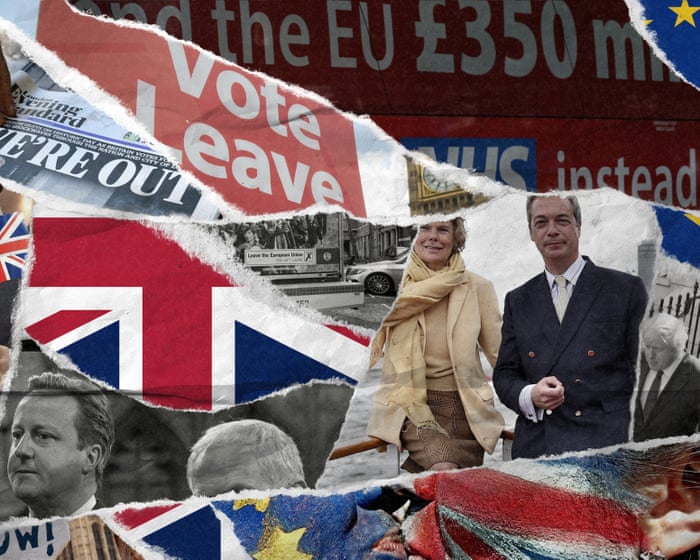
‘Canaries in the coalmine of populism’: an oral history of the Brexit campaign, told by those with a front row seat
Summary
In 2016, then-Prime Minister David Cameron announced a referendum on the UK’s membership in the European Union, scheduled for June 23, 2016. Key political figures like Boris Johnson initially struggled with their positions but eventually campaigned for Brexit, leading to divisions within the Conservative Party.Key Facts
- David Cameron promised a referendum on EU membership in 2013 and set the date for June 23, 2016.
- Boris Johnson, then mayor of London, declared his support for leaving the EU one day after the date announcement.
- Bernard Jenkin, a Conservative MP, warned that the referendum would harm the Conservative Party.
- David Lidington, a Cameron ally, campaigned for the UK to remain in the EU but understood Cameron’s reasoning for holding the vote.
- The Conservative Party was deeply divided, with many key members supporting Brexit while others wanted to remain.
- Boris Johnson was uncertain about his position for some time and faced pressure from colleagues and family before deciding to back Leave.
- Cameron was particularly upset by the decisions of Boris Johnson and Michael Gove to support Brexit, fearing personal and political betrayal.
- Boris Johnson’s announcement to support Leave is seen as a major turning point in the Brexit campaign.
Read the Full Article
This is a fact-based summary from The Actual News. Click below to read the complete story directly from the original source.