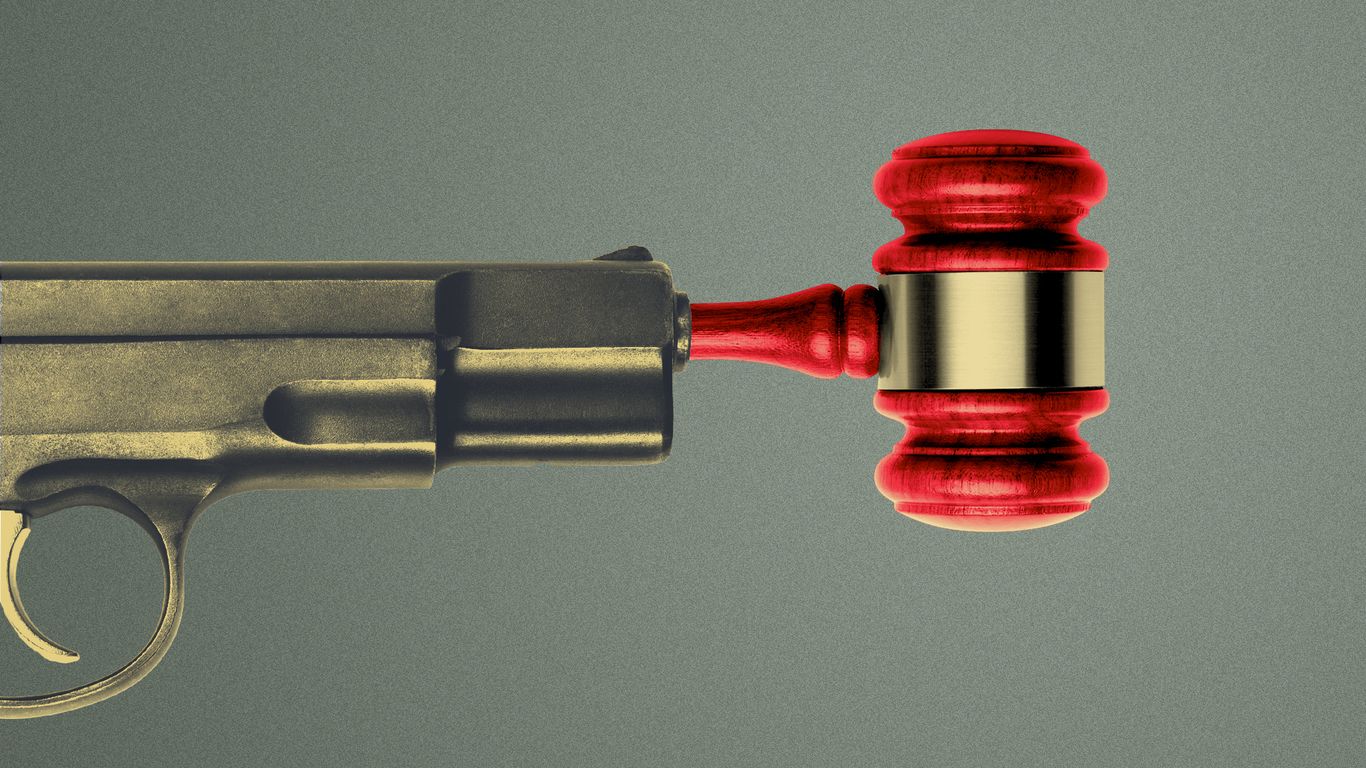
Supreme Court's Hawai'i gun law ruling narrows playbook for other states
Summary
The U.S. Supreme Court ruled that Hawai'i's law banning guns in private businesses open to the public is unconstitutional. This decision means states cannot require such businesses to be gun-free zones, shifting responsibility to business owners. The ruling narrows what gun restrictions states can create under the court's focus on historical traditions of firearm regulation.Key Facts
- The Supreme Court struck down Hawai'i’s law banning guns in private businesses open to the public by a 6-3 vote.
- The court said states cannot force all private businesses open to the public to be gun-free; business owners must decide instead.
- States can still ban guns on private property that is not open to the public, like homes or offices.
- Some states are requiring businesses to post signs about whether guns are allowed or banned.
- The court often allows gun bans in "sensitive places" like schools, government buildings, parks, bars, and restaurants serving alcohol.
- Illinois’ ban on assault-style weapons and high-capacity magazines was upheld by a federal court based on their military use.
- Individuals deemed dangerous, such as convicted felons or those committed for mental health reasons, can be blocked from buying guns, a point the Supreme Court confirmed in 2024.
- The court’s approach relies heavily on historical gun laws, which limits modern lawmakers’ ability to create new gun safety rules.
Read the Full Article
This is a fact-based summary from The Actual News. Click below to read the complete story directly from the original source.