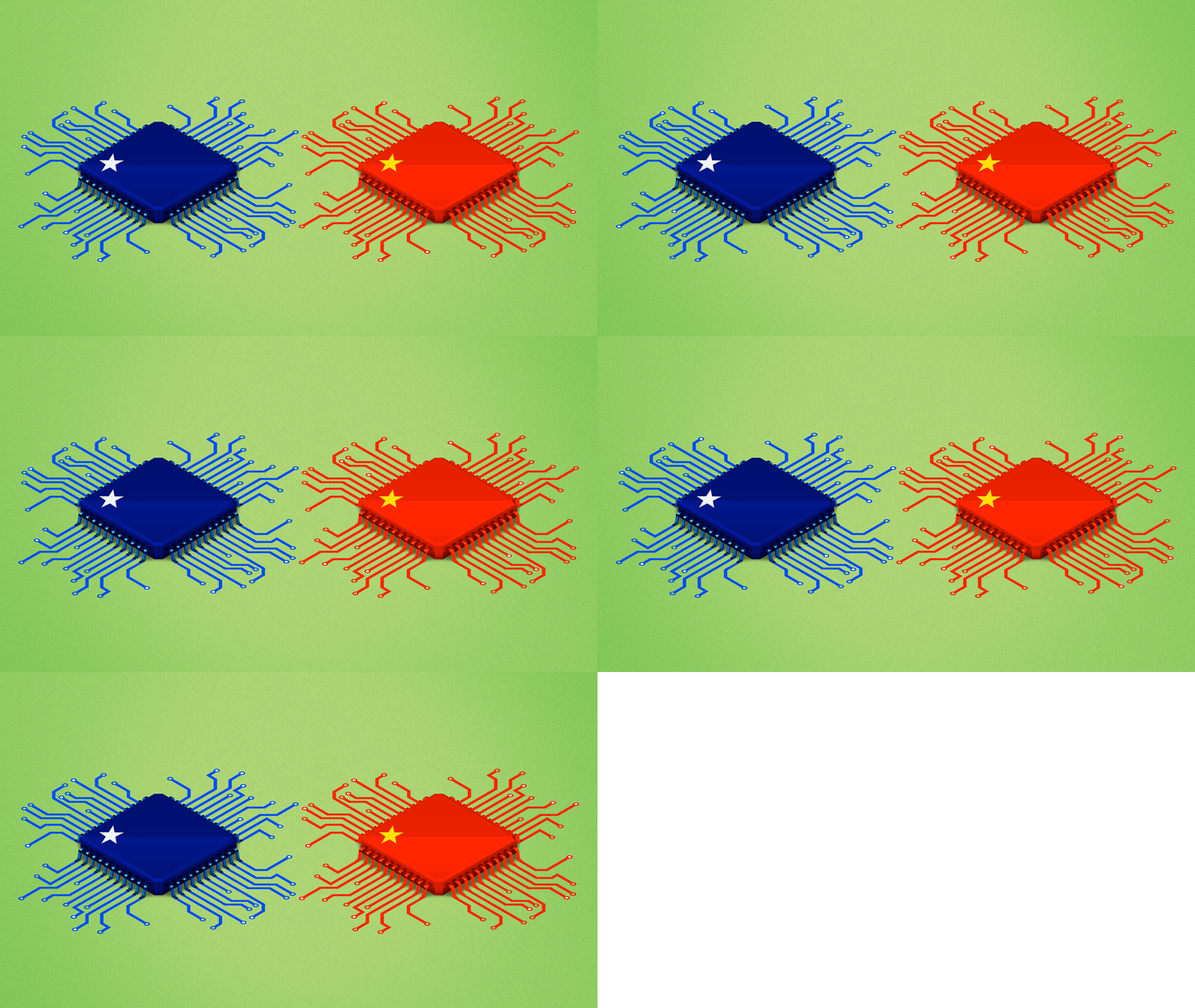
China's AI progress strains U.S. alliance pitch
Summary
The U.S. government is working to promote American artificial intelligence (AI) worldwide, but faces challenges because Chinese AI models are cheaper and more widely used in many countries. The U.S. export controls on AI tools have caused uncertainty, while China spreads its AI technology quickly across industries and countries, leading to concern about the future global balance in AI adoption.Key Facts
- China offers AI models that are less advanced than some American ones but are more affordable and widely available.
- The U.S. export controls on advanced AI models, like those from Anthropic, have created uncertainty in the AI industry.
- The U.S. State Department expanded the Pax Silica initiative to build an alliance of countries supporting U.S.-led AI technology and reduce dependence on China.
- Experts warn that widespread use of Chinese AI in developing countries could create dependence on Chinese technology similar to the Huawei case.
- Some countries, including in Europe and the UAE, seek "digital sovereignty," wanting more control over their own AI technology.
- 35 countries signed the "Declaration on AI Opportunity," supporting U.S. efforts to lead global AI development.
- U.S. officials criticize the pursuit of independent AI infrastructure as limiting innovation and cooperation.
- The main U.S. challenge is not just developing cutting-edge AI but convincing other countries to use American AI rather than Chinese alternatives.
Read the Full Article
This is a fact-based summary from The Actual News. Click below to read the complete story directly from the original source.