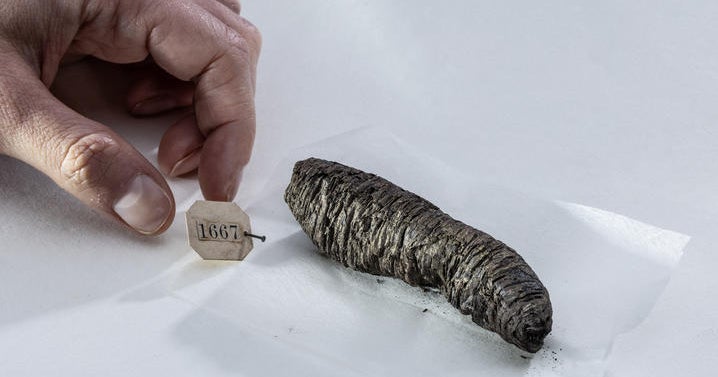
AI helps decode new secrets from scrolls burned by Mount Vesuvius
Summary
Researchers used artificial intelligence (AI) and advanced imaging to virtually unwrap and read ancient papyrus scrolls buried by Mount Vesuvius in 79 A.D. The University of Kentucky led a project that recovered large amounts of text from these fragile scrolls, revealing new Roman books and making it possible to study them in detail.Key Facts
- Mount Vesuvius erupted in 79 A.D., burying Pompeii and Herculaneum, where the scrolls were found.
- About 1,800 carbonized scrolls were discovered in an ancient library in Herculaneum in the 18th century.
- The scrolls are too fragile to unroll physically without destroying them.
- Researchers used a particle accelerator and AI to detect ink inside the scrolls and create virtual unwrappings.
- A global contest called the Vesuvius Challenge helped decode parts of the scrolls, led by Brent Seales.
- The University of Kentucky team virtually unwrapped a whole scroll and recovered over 70 columns of text from another.
- They found new works by the ancient philosopher Philodemus, previously unknown except for one book.
- More than 600 scrolls remain unopened, and ongoing teamwork combining AI and expert reading is needed to understand them fully.
Read the Full Article
This is a fact-based summary from The Actual News. Click below to read the complete story directly from the original source.