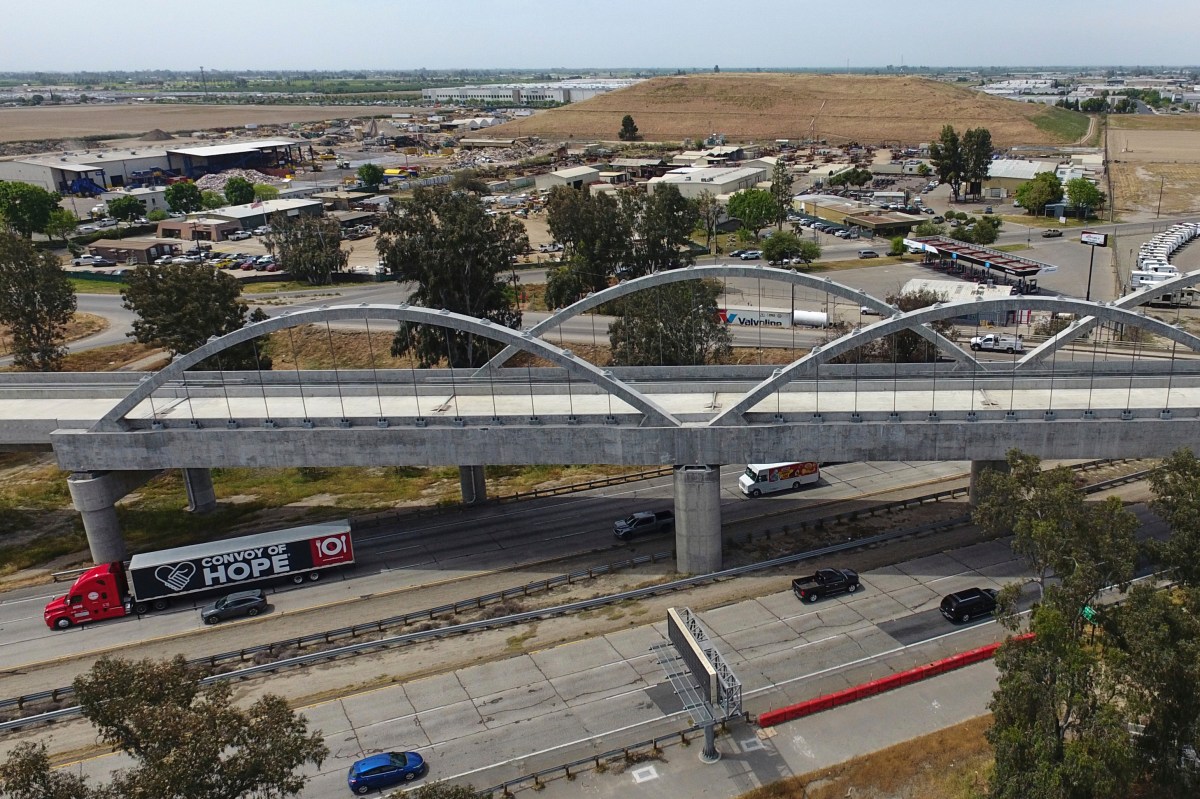
California's High-Speed Rail Is No Longer the Same Project Voters Approved
Summary
California’s high-speed rail project has changed significantly since voters approved it in 2008. Originally planned as a single state-funded rail line connecting San Francisco and Los Angeles, it now involves private investments, higher costs, delayed timelines, and phased construction focused first on the Central Valley.Key Facts
- In 2008, California voters approved Proposition 1A, authorizing $9.95 billion in bonds for the high-speed rail project.
- The project aims to connect San Francisco and Los Angeles with trains reaching 220 mph.
- Current estimated cost is about $100 billion, three times the original forecast.
- The completion date has been pushed back to 2038.
- The project shifted from mostly public funding to including private investors through a partnership with several global rail companies.
- The plan now focuses on building the rail line in phases, beginning with the Central Valley segment from Merced to Bakersfield.
- Some original stations, like the Bakersfield downtown station, might be replaced with temporary locations due to budget limits.
- President Donald Trump and Transportation Secretary Sean Duffy have criticized the project’s cost and timeline.
Read the Full Article
This is a fact-based summary from The Actual News. Click below to read the complete story directly from the original source.