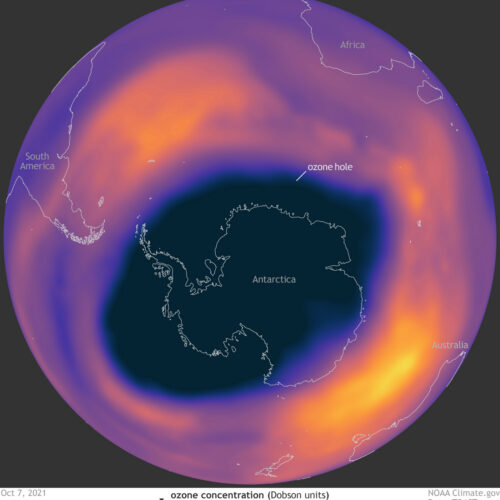
Ozone loss was a thing even before CFCs were widely used
Summary
A new study from MIT examined whether ozone layer damage could have been detected earlier than previously thought, using today’s scientific methods applied to past data. The study shows ozone loss started before the wide use of CFCs, with other chemicals contributing, and it suggests ozone depletion could have been spotted as early as the late 1950s.Key Facts
- Chlorofluorocarbons (CFCs), linked to ozone damage, were discovered to harm ozone in 1974.
- The ozone hole over Antarctica was found in 1985, leading to a global ban on CFCs in 1987.
- Before CFCs, carbon tetrachloride, an older industrial solvent, contributed to ozone depletion.
- Ice core data confirms carbon tetrachloride was present in the atmosphere at higher levels than early CFCs in 1950.
- Ozone forms in the atmosphere through sunlight and oxygen, and natural factors like solar cycles and volcanic eruptions cause variability.
- Researchers used modern climate models with historical data to simulate ozone levels starting from 1850.
- The model suggests ozone depletion could have been detected in the upper stratosphere over the tropics by 1957.
- Detection over Antarctica’s ozone hole area might have been possible by 1976, much earlier than when it was officially discovered.
Read the Full Article
This is a fact-based summary from The Actual News. Click below to read the complete story directly from the original source.