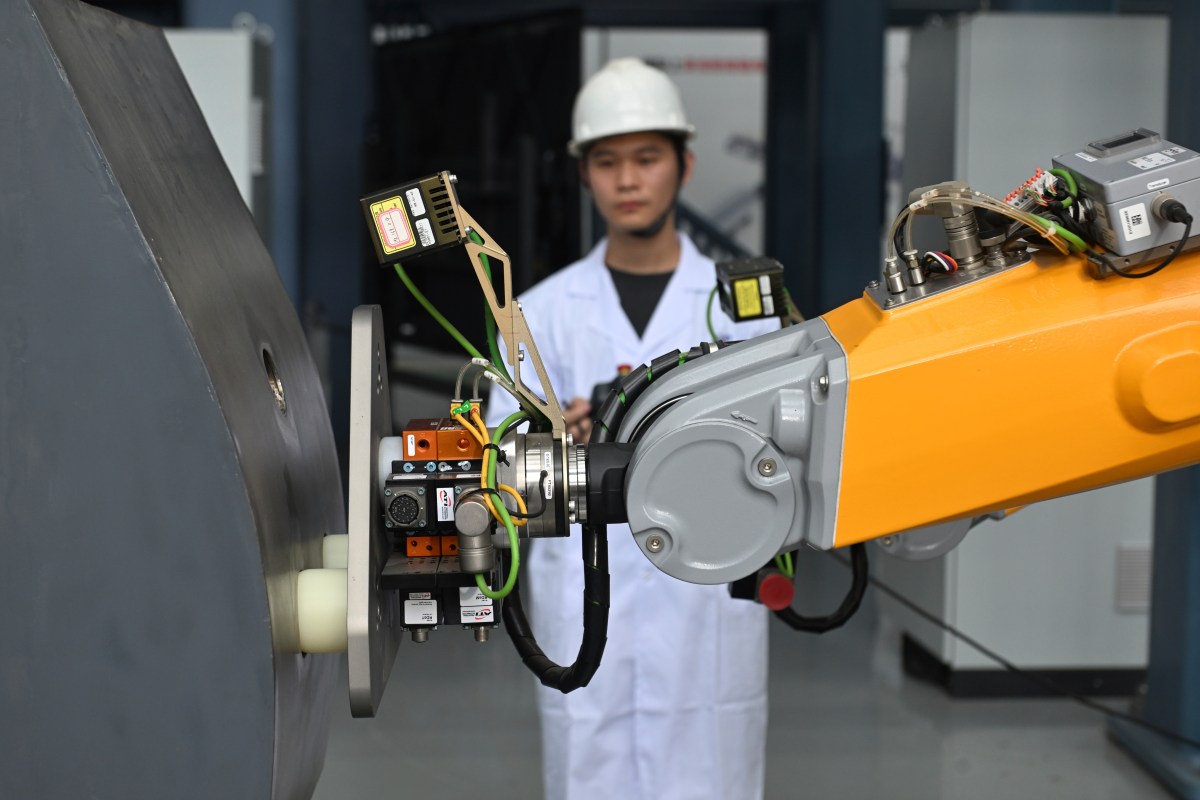
China Hails Breakthrough in 'Artificial Sun' Project
Summary
China has successfully tested two large superconducting magnets used to contain superheated plasma in fusion reactors, a key step in their "artificial sun" project. These magnets are fully made in China and designed to operate under extreme conditions, helping advance fusion energy research.Key Facts
- Fusion energy is produced by combining light atomic nuclei, unlike traditional nuclear power which splits heavy atoms.
- Fusion reactions require extremely high temperatures (over 180 million degrees Fahrenheit) and strong magnetic fields to hold plasma without touching reactor walls.
- China tested a toroidal-field magnet measuring 69 x 39 x 11 feet, weighing 582 tons, with a 6.5-tesla magnetic field and a 60-year expected lifespan.
- The high-temperature superconducting central solenoid coil drives plasma current to stabilize the fusion reaction.
- These magnets store three times more energy than similar magnets used in the international ITER fusion project in France.
- The tested components were developed in six years with 47 patents and 14 technical standards, all made within China.
- The test confirmed the magnets' readiness but did not produce electricity during this phase.
- China aims to lead in fusion energy as part of a broader push for technology-driven economic growth and has invested billions in fusion projects.
Read the Full Article
This is a fact-based summary from The Actual News. Click below to read the complete story directly from the original source.