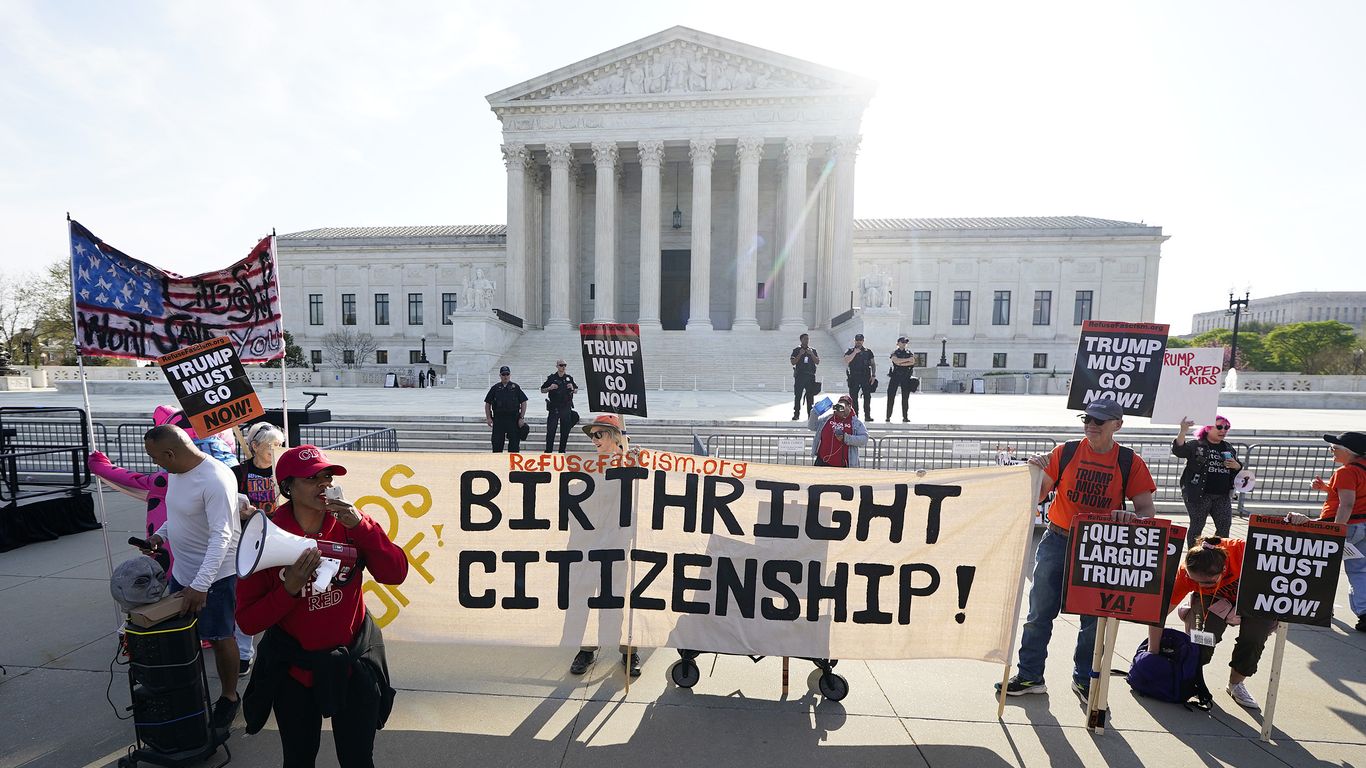
SCOTUS rejects Trump's birthright citizenship policy
Summary
The Supreme Court rejected President Donald Trump’s executive order that tried to limit birthright citizenship to children born in the U.S. only if their parents were legally present. The Court confirmed the 14th Amendment grants citizenship to anyone born on American soil, regardless of their parents’ status.Key Facts
- The Supreme Court’s decision says all children born in the U.S. are citizens by birth under the 14th Amendment.
- President Trump aimed to stop children of parents in the country illegally from automatically getting citizenship.
- Chief Justice John Roberts wrote the majority opinion supporting birthright citizenship.
- Justice Clarence Thomas disagreed in a dissenting opinion, partly supporting the President’s order.
- If the order had passed, millions of children could lose citizenship and some risk becoming stateless.
- Before the ruling, President Trump criticized two justices he appointed who were expected to oppose his position.
- The order challenged the idea that people born in the U.S. illegally are “subject to the jurisdiction” of the country.
- Surveys show about two-thirds of Americans support keeping birthright citizenship as guaranteed by the Constitution.
Read the Full Article
This is a fact-based summary from The Actual News. Click below to read the complete story directly from the original source.