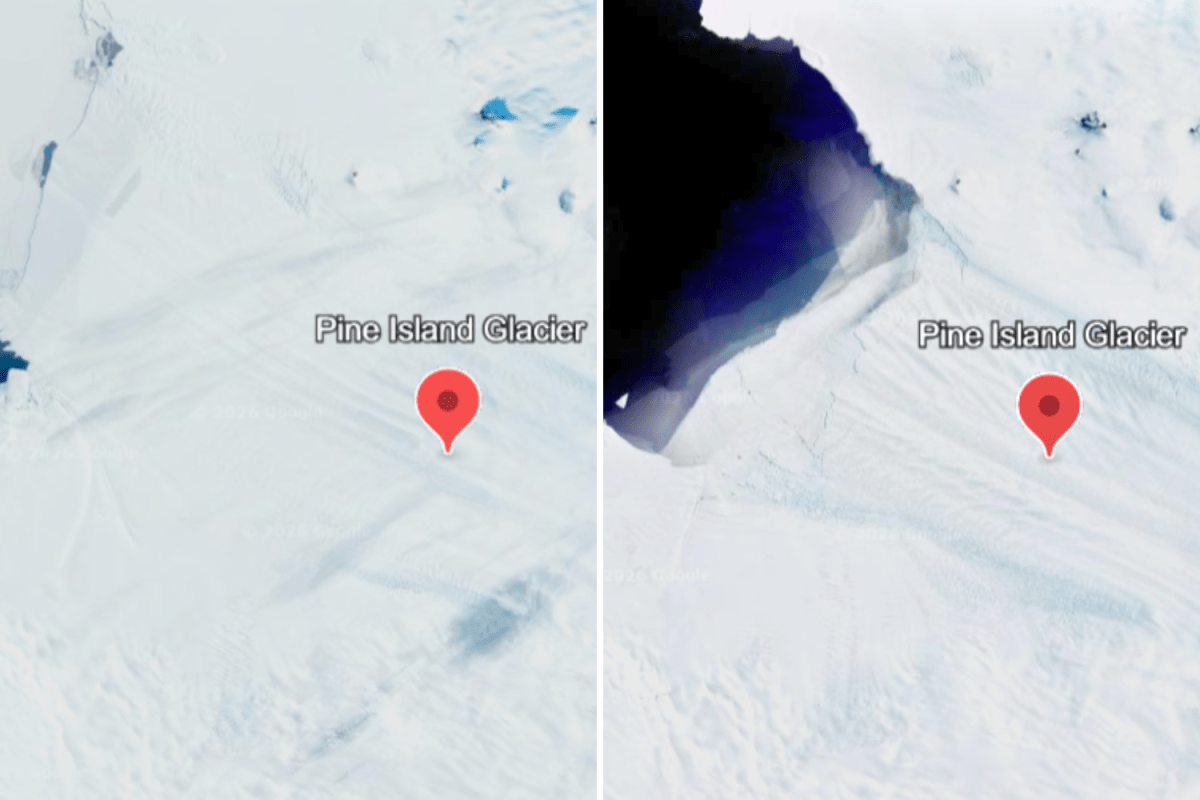
Satellite Images Show Scale and Speed of Antarctic Glacier Melting
Summary
A new study shows human-caused climate change has sped up the retreat of Antarctica’s Pine Island Glacier by about 18–20% since the 1940s. Using satellite images and computer models, researchers found the glacier has moved several miles farther inland because of warming linked to greenhouse gas emissions.Key Facts
- Pine Island Glacier is one of the fastest-changing glaciers in Antarctica.
- Since the 1940s, the glacier started retreating, but human-driven warming since the 1960s made the retreat much faster.
- By 2015, the glacier had retreated around 2.4 miles farther inland than it would have naturally.
- The glacier’s flow has increased to more than 10 meters per day since the early 1990s.
- Large blocks of ice break off (calving), reshaping the glacier’s edge quickly.
- Pine Island Glacier contributes significantly to global sea level rise.
- Researchers used satellite data and advanced models to compare scenarios with and without human-caused warming.
- The study warns that the glacier might slow down temporarily but will likely continue retreating if global warming keeps increasing.
Read the Full Article
This is a fact-based summary from The Actual News. Click below to read the complete story directly from the original source.