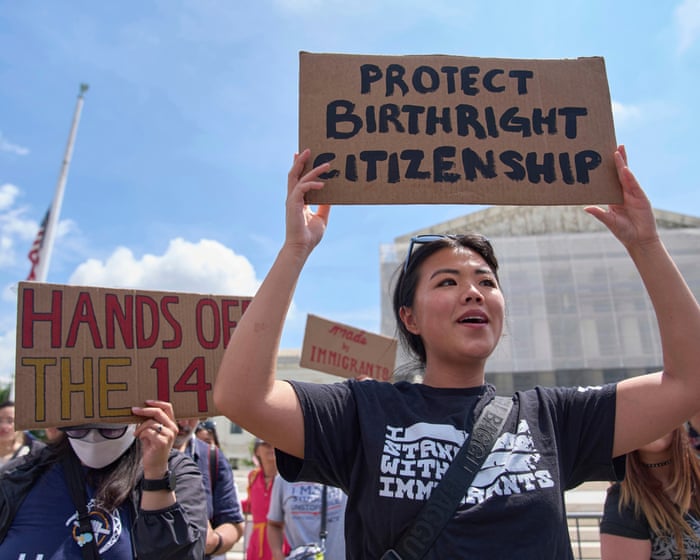
What to know about the US supreme court ruling on birthright citizenship
Summary
The US Supreme Court ruled against President Donald Trump’s attempt to end birthright citizenship for children born in the United States to parents who are unlawfully or temporarily in the country. The court confirmed that the 14th Amendment grants citizenship to almost all children born on US soil.Key Facts
- The Supreme Court rejected President Trump’s effort to stop birthright citizenship.
- The ruling confirms the 14th Amendment’s Citizenship Clause applies to children born in the US, regardless of their parents' immigration status.
- President Trump issued an executive order early in his second term trying to end birthright citizenship, which led to lawsuits.
- The American Civil Liberties Union (ACLU) and several states challenged Trump’s order in court.
- The court relied on the precedent set by the 1898 case United States v. Wong Kim Ark, which protected citizenship rights even for children of immigrants who could not become citizens.
- Birthright citizenship in the US is based on jus soli, meaning citizenship by place of birth.
- The 14th Amendment was adopted in 1868 to ensure citizenship rights for Black Americans after the Civil War.
- Very few exceptions exist where a child born in the US is not granted citizenship, such as children of foreign diplomats.
Read the Full Article
This is a fact-based summary from The Actual News. Click below to read the complete story directly from the original source.