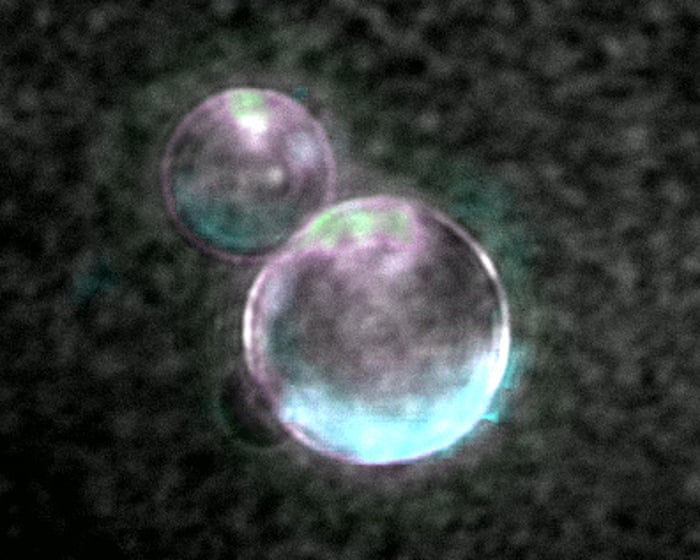
‘Beautiful blobs’: synthetic life a step closer as scientists make cells using lab-made DNA
Summary
Scientists have created tiny synthetic blobs called SpudCells that use lab-made DNA to grow, copy their genes, and divide in a liquid dish. These synthetic cells are made from chemicals and show some behaviors of living cells, moving closer to making life from non-living parts.Key Facts
- SpudCells are tiny water-filled spheres made from chemicals and synthetic DNA.
- They can grow, copy their DNA, and split to form new cells in a nutrient-rich liquid.
- SpudCells need other tiny structures called ribosomes and enzymes supplied from “feeder” blobs to make proteins.
- These synthetic cells are less capable than natural cells and cannot make their own energy or clean waste.
- The researchers can make SpudCells with genetic advantages that outcompete others, demonstrating basic evolution.
- The creation of SpudCells aims to better understand what life needs and how it might have begun from chemistry.
- Unlike previous synthetic life that modified existing cells, SpudCells are built from scratch with fully known parts.
- The research team plans to create an institution called Biotic to advance synthetic cell technology.
Read the Full Article
This is a fact-based summary from The Actual News. Click below to read the complete story directly from the original source.