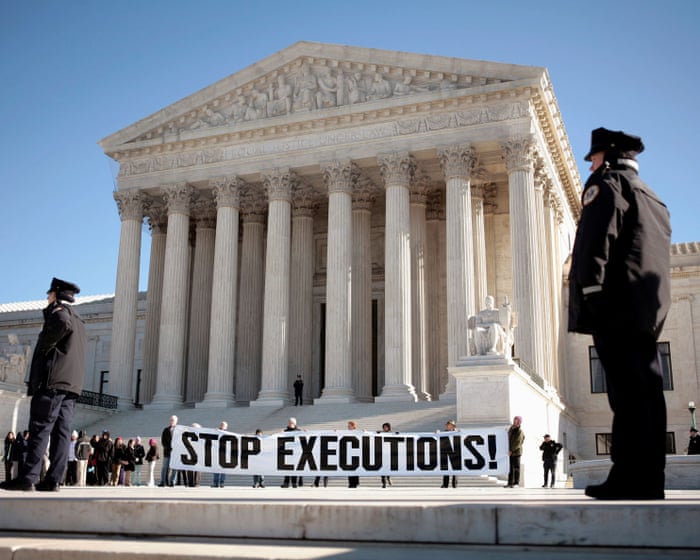
The scourge of the death penalty hangs over America | Austin Sarat
Summary
On July 2, 1976, the U.S. Supreme Court ruled in several cases that allowed the death penalty to continue under new legal guidelines. These rulings meant that states could rewrite laws to try to make capital punishment fairer, but the court has continued to permit the death penalty as constitutional.Key Facts
- The Supreme Court stopped the death penalty in 1972 in Furman v. Georgia because of concerns about unfair and arbitrary sentencing.
- The Furman ruling did not abolish the death penalty but required states to change their laws to avoid bias.
- In response, 37 states revised their laws to follow the court's guidelines for fair sentencing.
- On July 2, 1976, the Supreme Court’s decisions in five cases, including Gregg v. Georgia, allowed the death penalty to resume under these new rules.
- Justice Potter Stewart wrote the majority opinion saying the death penalty does not always violate the Constitution.
- The ruling has prevented the court from ending the death penalty nationwide since then.
- Some experts believe the court’s interpretation has weakened protections against cruel and unusual punishment under the Eighth Amendment.
- The court’s 1976 decisions still serve as the legal basis for death penalty cases today.
Read the Full Article
This is a fact-based summary from The Actual News. Click below to read the complete story directly from the original source.