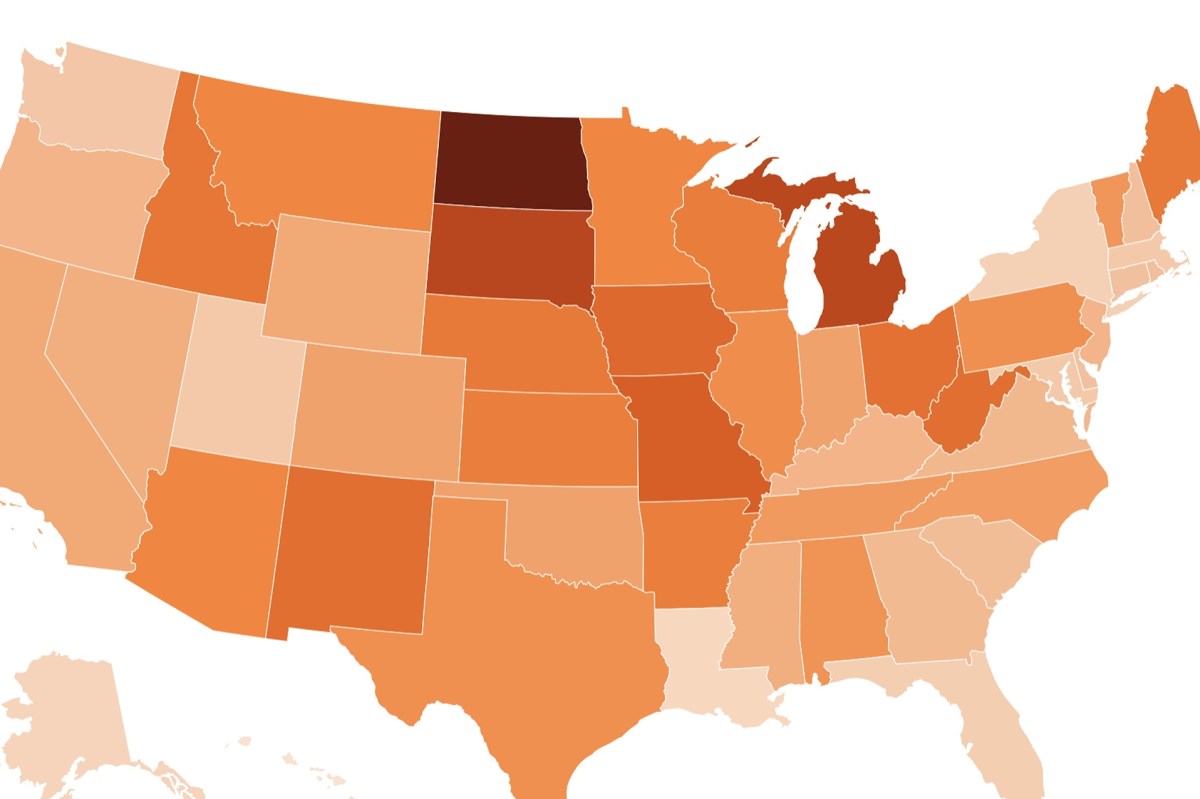
Map Shows States Most Vulnerable if USMCA Trade Deal Ends
Summary
President Donald Trump has decided not to renew the US-Mexico-Canada trade deal (USMCA) as it currently stands. This trade agreement, which covers $1.6 trillion in annual trade, remains active until 2036, but the U.S. is negotiating with Canada and Mexico and has threatened to leave the deal entirely. States that rely heavily on exports to Canada and Mexico, especially those with strong manufacturing and farming industries, would be most affected if the deal ends and tariffs increase.Key Facts
- The USMCA is a trade deal between the U.S., Mexico, and Canada that started on July 1, 2020, replacing the older NAFTA agreement.
- It covers about $1.6 trillion in trade every year among the three countries.
- The deal must be renewed every six years, with the current term ending in 2036 if extended.
- President Trump said in June 2024 that he is "not looking to renew" the deal and criticized Canada and Mexico's treatment of the U.S.
- If the USMCA ends, tariffs (taxes on imports and exports) between the countries could rise, making trade more expensive.
- This would hurt states that export many goods, especially cars and farm products, to Canada and Mexico.
- The 10 U.S. states at highest risk of economic harm include North Dakota, South Dakota, Michigan, Missouri, Iowa, Montana, New Mexico, West Virginia, Ohio, and Idaho.
- The automotive industry is closely connected across the three countries with parts and assembly spread out, so it could face major difficulties if the deal ends.
Read the Full Article
This is a fact-based summary from The Actual News. Click below to read the complete story directly from the original source.