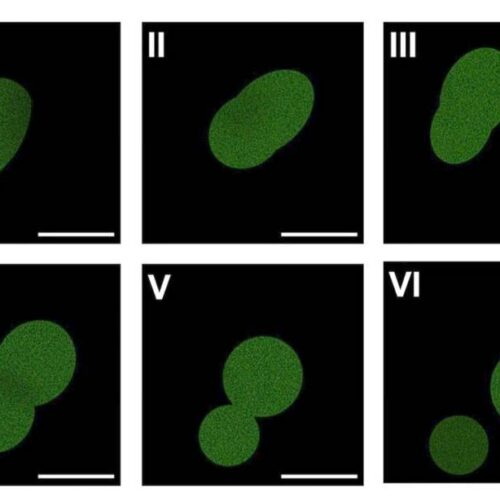
Artificial cell manages a few rounds of cell division
Summary
Researchers at the University of Minnesota created an artificial cell called "SpudCell" that can enclose genetic material, import new materials from outside, and divide a few times to create offspring. The system uses parts from viruses and purified proteins to copy DNA and make proteins inside the cell-like membranes.Key Facts
- SpudCells are simple artificial cells enclosed by membranes that can take in new materials.
- The cells contain genetic material spread across seven circular DNA molecules.
- DNA replication is powered by a system from the Phi29 virus, which infects bacteria.
- RNA production comes from a viral gene called T7 RNA polymerase, which the SpudCells can make themselves.
- Proteins needed to translate RNA into other proteins were purified and added to the system by researchers.
- A gene in SpudCells produces pore proteins to allow small molecules and ions to pass through the membrane.
- SpudCells can divide and create a few generations of offspring but lose some DNA molecules after several divisions.
- This work may help understand how life first formed and what minimal living cells could look like.
Read the Full Article
This is a fact-based summary from The Actual News. Click below to read the complete story directly from the original source.