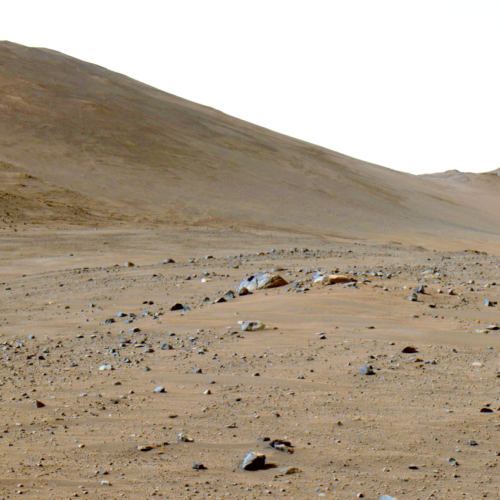
A martian rock has lots of carbon on it, and it's not clear why
Summary
NASA’s Perseverance rover found a new type of organic carbon on the surface of a Martian rock in Jezero Crater. Unlike previous findings that required drilling, this carbon was detected right on the rock’s surface, but scientists are still unsure if it came from living things or non-living chemical processes.Key Facts
- Perseverance rover has been exploring Mars’ Jezero Crater for five years.
- It detected complex macromolecular carbon on the surface of a rock named Bright Angel near an ancient river channel called Neretva Vallis.
- This carbon was found using SHERLOC, an instrument that uses ultraviolet light to identify chemicals.
- The carbon’s pattern (called the G-band) suggests a structure similar to kerogen, a substance on Earth usually made by fossilized life.
- Scientists do not confirm the carbon is from life because it might have formed through non-living processes.
- Tests showed the signal was not caused by Perseverance’s instruments or contamination from Earth.
- One detected rock with the carbon was never touched by the rover’s tools; the rover only removed dust with nitrogen gas.
- To understand the origin of the carbon, scientists may need to bring samples back to Earth for more detailed study.
Read the Full Article
This is a fact-based summary from The Actual News. Click below to read the complete story directly from the original source.