We Are Not Machines by Sarah O’Connor review – can dignity at work survive the tech revolution?
Summary
The article reviews Sarah O’Connor’s book *We Are Not Machines*, which explores how artificial intelligence (AI) and automation are changing work and the challenges they pose to workers’ dignity and safety. It discusses the ongoing struggle to balance technology use with fair working conditions and highlights examples of workers trying to influence how AI impacts their jobs.Key Facts
- Job vacancies in the UK fell to a five-year low in June amid concerns about AI’s impact on employment.
- The book highlights a long-standing conflict between human labor and machines, not a completely new problem.
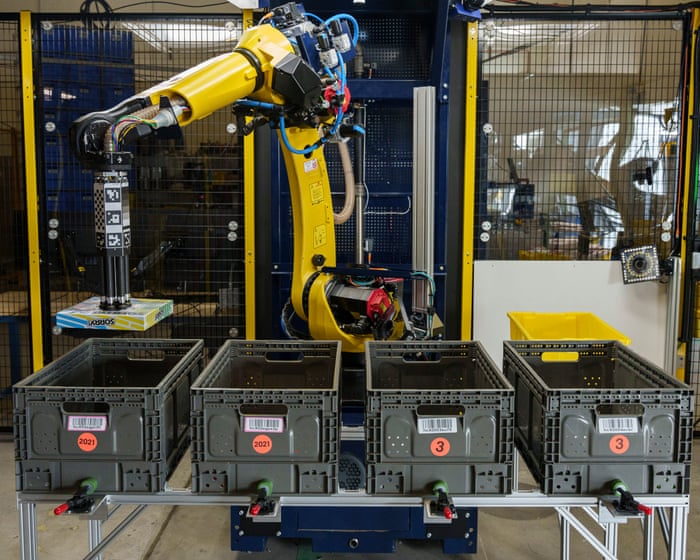
- Sarah O’Connor reports on workplaces like an Amazon warehouse where humans and robots work together, and remote workers monitor AI systems.
- The management idea of “Taylorism,” which breaks work into measurable parts to boost productivity, is still widely used today.
- Technology often carries assumptions that human work can be optimized or replaced by machines, emphasizing productivity over worker dignity.
- Some employers may prefer cheaper, faster machine work even if it is lower quality than human work.
- Workers and consumers are pushing back, like the Writers Guild striking to control AI use and Dutch care workers setting their own practices.
- The book warns about the risk that humans might change to fit machines’ ways rather than machines adapting to human needs.
Read the Full Article
This is a fact-based summary from The Actual News. Click below to read the complete story directly from the original source.