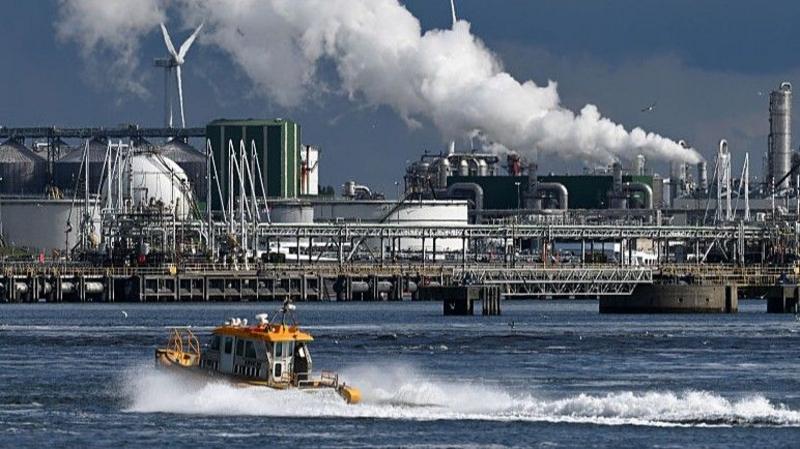
Pressure builds on Europe's biggest port to be greener
Summary
The Port of Rotterdam in the Netherlands is Europe’s largest freight port and a major center for oil refining and chemical production. It faces pressure from environmental groups to reduce its large carbon emissions and transition away from fossil fuels toward greener energy sources.Key Facts
- Rotterdam is Europe’s biggest freight port and handles nearly as much cargo as all UK ports combined.
- Five oil refineries, including Shell's largest in Europe, operate at the port, processing hundreds of thousands of barrels of crude oil daily.
- The fossil fuels passing through the port are linked to about 600 megatonnes of CO2 emissions annually, far exceeding the emissions of the Netherlands' biggest airport.
- Rotterdam’s industrial cluster emits around 29 million tonnes of CO2 each year, about half of the Netherlands’ total domestic emissions.
- Environmental group Advocates for the Future filed a lawsuit claiming the port authority is not doing enough to reduce fossil fuel dependency.
- The Port Authority plans to cut its own emissions by 90% by 2030 and is investing in hydrogen fuel, onshore electric power for ships, and alternative fuels.
- The port is focusing on carbon capture and storage (CCS) to reduce CO2 emissions by storing it underground.
- Many major companies operating at the port are controlled by boardrooms abroad, making emission regulations challenging.
Read the Full Article
This is a fact-based summary from The Actual News. Click below to read the complete story directly from the original source.