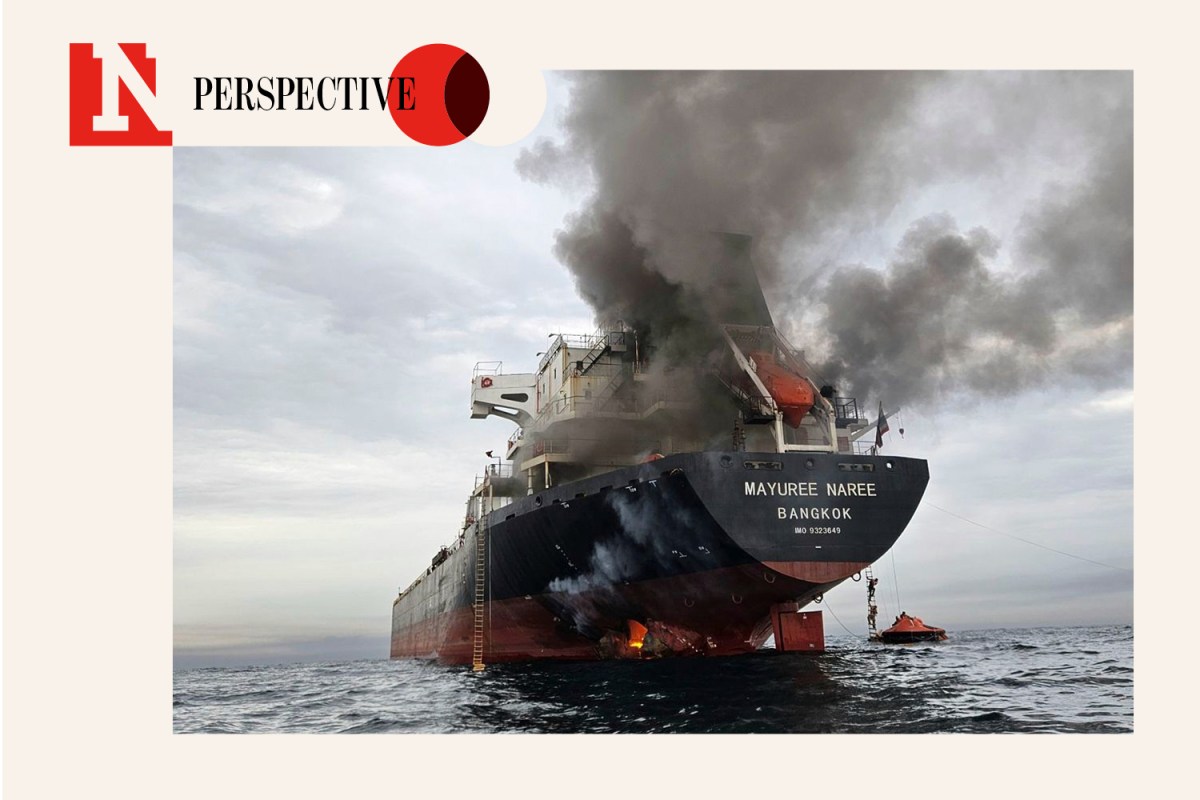
Why Dark Crossings Risk a Forever War
Summary
Ships passing through the Strait of Hormuz are turning off their Automatic Identification System (AIS) to avoid being easily tracked amid ongoing conflict between the U.S. and Iran. This practice helps keep oil flowing but increases risks, leading to continued U.S. military presence in the region and potential for a prolonged conflict.Key Facts
- The Strait of Hormuz is a key shipping route where tensions between the U.S. and Iran are high.
- Ships turn off AIS, a system that broadcasts their identity and position, to avoid being targeted.
- Even with AIS off, ships remain visible on radar and to naval forces nearby.
- Maritime guidance advises crews to rely on traditional navigation methods and constant vigilance when AIS is off.
- Iran recently attacked a container ship in the strait, and the U.S. responded with strikes on multiple targets.
- Both the U.S. and Iran claim control over the Strait of Hormuz.
- The practice of turning off AIS helps some ships pass safely but increases risks and costs, including higher insurance.
- This situation may lead to a long-term U.S. military presence, contributing to a "forever war" in the region.
Read the Full Article
This is a fact-based summary from The Actual News. Click below to read the complete story directly from the original source.