Solution to Feynman's reverse sprinkler puzzle also applies to "silly sprinklers"
Summary
Researchers at New York University studied "silly sprinklers" to understand a physics problem first discussed by physicist Richard Feynman and Ernst Mach in the 19th and 20th centuries. Their experiments showed that a reverse sprinkler spins much slower than a regular one and explained how water flow inside the sprinkler creates forces that cause this rotation.Key Facts
- "Silly sprinklers" create fun water patterns like loops and spirals.
- The reverse sprinkler problem was popularized by physicist Richard Feynman.
- Ernst Mach first wrote about a similar idea in 1883.
- Feynman tested the problem himself and found a reverse sprinkler mostly stays still after an initial movement.
- Some scientists thought a reverse sprinkler might spin backward due to vortex formation.
- New York University researchers made sprinklers with very low friction to study the effect carefully.
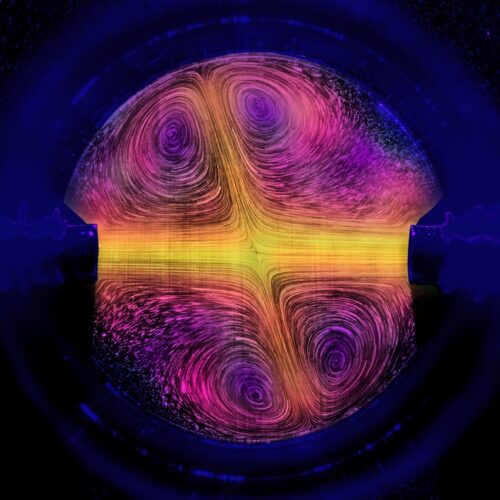
- They used dyes and lasers to visualize water flow inside the sprinkler.
- The reverse sprinkler spins about 50 times slower than a normal sprinkler, caused by internal water jets pushing against each other unevenly.
Read the Full Article
This is a fact-based summary from The Actual News. Click below to read the complete story directly from the original source.