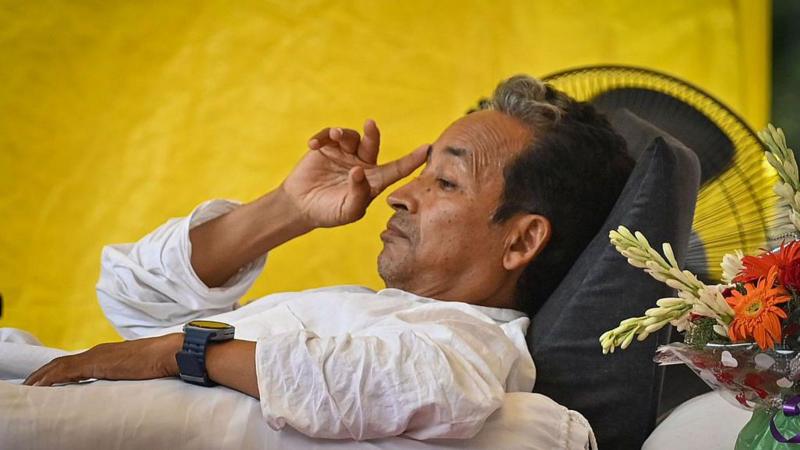
One man's hunger strike changed India's map. Can it still change politics?
Summary
A hunger strike by Potti Sriramulu in 1952, lasting 58 days until his death, led to the creation of a separate state for Telugu speakers in India. Fasting remains a significant form of protest in India, with recent examples like climate activist Sonam Wangchuk using hunger strikes to push for political and social change.Key Facts
- Potti Sriramulu fasted for 58 days in 1952 to demand a Telugu-speaking state.
- His death triggered protests and government action, resulting in the formation of Andhra state.
- Fasting has deep religious and cultural roots in India, linked to Hinduism, Buddhism, and Jainism.
- Mahatma Gandhi popularized fasting as a political tool during India's independence movement.
- Gandhi fasted multiple times, with his longest fast lasting 21 days.
- Hunger strikes have been used for various causes in independent India, including farmers' rights and environmental issues.
- Sonam Wangchuk, a climate activist, is currently on a hunger strike demanding education reforms.
- The Delhi High Court has ordered the government to monitor and care for Wangchuk's health during his fast.
Read the Full Article
This is a fact-based summary from The Actual News. Click below to read the complete story directly from the original source.