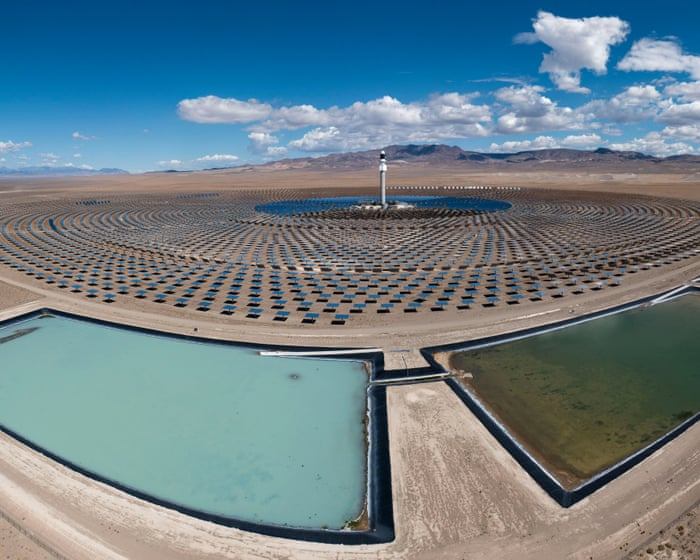
Molten salt and human sweat: the weird batteries that could store renewable energy
Summary
New types of batteries are being developed to store renewable energy more efficiently and sustainably. These include large-scale projects like molten salt batteries in deserts and liquid air "cryobatteries," as well as tiny batteries that can power small devices without relying on scarce minerals.Key Facts
- The UAE has the world’s largest battery system, combining 5.2GW of solar power with 19GWh of storage to power about 500,000 homes overnight.
- Researchers in Colorado are creating very small batteries to track young fish, showing alternative uses of battery technology.
- Traditional lithium-ion batteries depend on minerals like lithium, cobalt, and nickel, which can harm the environment and communities.
- Alternative batteries can often be reused or recycled indefinitely, lasting about 20 years.
- The Carrington "liquid air" cryobattery in the UK stores energy by cooling air to -196°C, turning it liquid, and then releasing electricity by warming the air.
- The Carrington project will store 300MWh of energy and produce 50MW for six hours, enough for nearly half a million homes.
- The Crescent Dunes project in Nevada uses molten salt heated to 560°C to store solar energy and release it for up to 10 hours after sunset.
- New battery technologies aim to power everything from small electronics to heating systems and even missiles without relying heavily on critical minerals.
Read the Full Article
This is a fact-based summary from The Actual News. Click below to read the complete story directly from the original source.