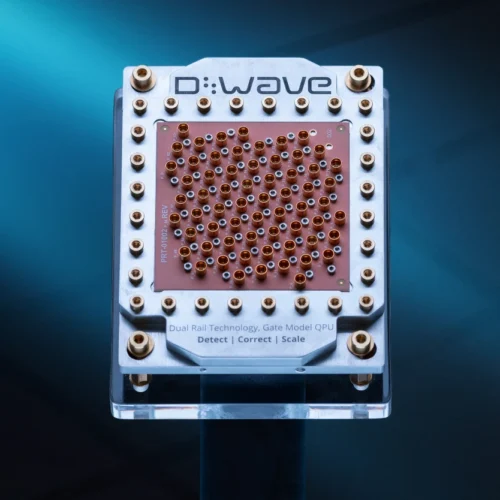
D-Wave on rails: Company tests entanglement on its dual-rail qubits
Summary
D-Wave is working on a new type of quantum computer qubit called a dual-rail qubit, which can detect errors more easily. The company has shown that it can entangle two of these qubits without losing their error-detection benefits, a key step toward useful quantum computing.Key Facts
- D-Wave originally built quantum annealers, specialized machines for optimization problems, unlike general-purpose quantum computers.
- The company acquired Quantum Circuits, which developed dual-rail qubits, a technology also used by Amazon.
- Dual-rail qubits use two linked resonators to hold a single photon in a superposition, a basic quantum computing feature.
- The most common error in dual-rail qubits is photon loss, which is easy to detect and correct.
- Other errors like phase flips are less common, allowing simpler error correction codes.
- D-Wave published a paper showing entanglement of two dual-rail qubits while maintaining their main advantage of easy error detection.
- This breakthrough could help build quantum computers with fewer physical qubits per logical qubit, reducing hardware needs.
- The company’s work addresses how errors behave during qubit operations, important for building reliable quantum computers.
Read the Full Article
This is a fact-based summary from The Actual News. Click below to read the complete story directly from the original source.