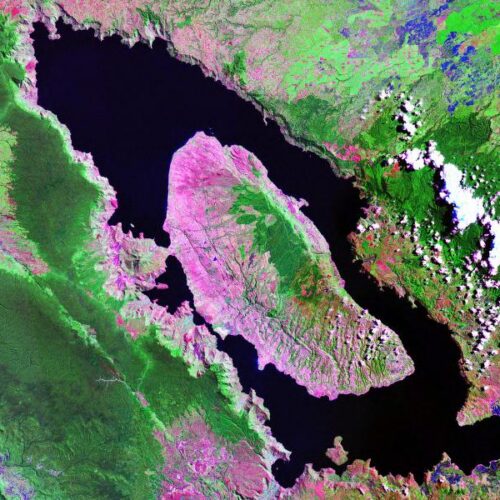
Mount Toba eruption doesn't seem like it could nearly kill our species
Summary
Around 74,000 years ago, the Mount Toba volcano erupted on Sumatra, releasing a huge amount of magma and sulfur dioxide. Scientists studying lake sediments near Mount Kilimanjaro found that the eruption caused less than two years of mild cooling, not a long-lasting global catastrophe.Key Facts
- Mount Toba’s eruption was the largest volcanic event in the last 2.6 million years.
- The volcano released about a thousand times more magma than the 1991 Mount Pinatubo eruption.
- Previously, some believed the eruption caused extreme planetary cooling and threatened early humans.
- Researchers studied sediment layers at Lake Chala near Mount Kilimanjaro to check past climate changes.
- Lake Chala’s sediments form clear yearly layers like tree rings, allowing precise dating of events.
- The evidence showed the eruption’s cooling effect lasted under two years and lowered temperatures by about half a degree Celsius.
- Sulfur dioxide from the eruption made a haze that reflected sunlight but larger amounts settled faster, lessening long-term cooling.
- Other sediment records are less clear because materials from different years can mix in lakes or oceans.
Read the Full Article
This is a fact-based summary from The Actual News. Click below to read the complete story directly from the original source.