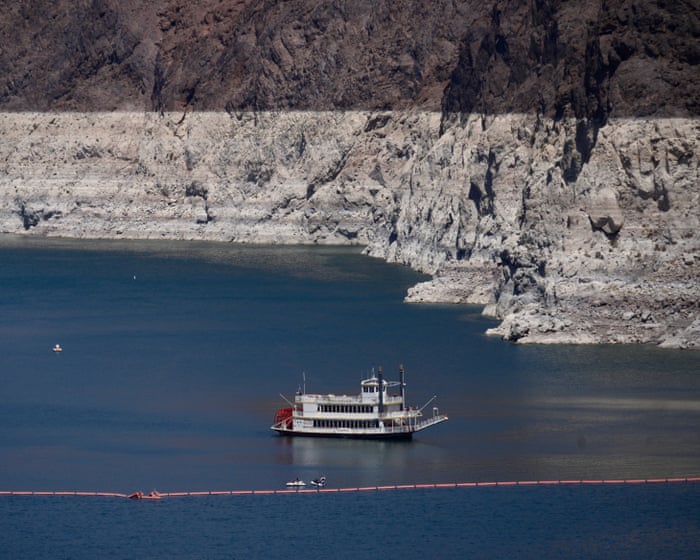
Lake Mead plummets to historic low water level as Colorado River struggles
Summary
Lake Mead, the largest reservoir in the United States, has dropped to its lowest water level since it was filled about 90 years ago. The Colorado River, which Lake Mead feeds, is facing severe water shortages caused by overuse, drought, and less snowmelt, affecting millions of people across several states.Key Facts
- Lake Mead's water level dropped to 1,040.4 feet above sea level, its lowest since the reservoir was created.
- The Colorado River provides water to around 40 million people in seven US states, tribal nations, and Mexico.
- The river basin is under stress due to overuse, drought, extreme heat, and reduced snowmelt from the Rocky Mountains.
- Lake Powell, the second large reservoir on the Colorado River, is also at historic low levels.
- Federal officials decided not to release water from Lake Powell to protect the habitat of the threatened humpback chub fish.
- A federal proposal suggests that Arizona, California, and Nevada reduce their water use to manage shortages.
- The drought has caused visible impacts like exposed shorelines, shifted boat ramps, and water officials pumping from deeper areas.
- More detailed plans for managing the water crisis will be released soon, but experts worry current efforts may not fully solve the problem.
Read the Full Article
This is a fact-based summary from The Actual News. Click below to read the complete story directly from the original source.