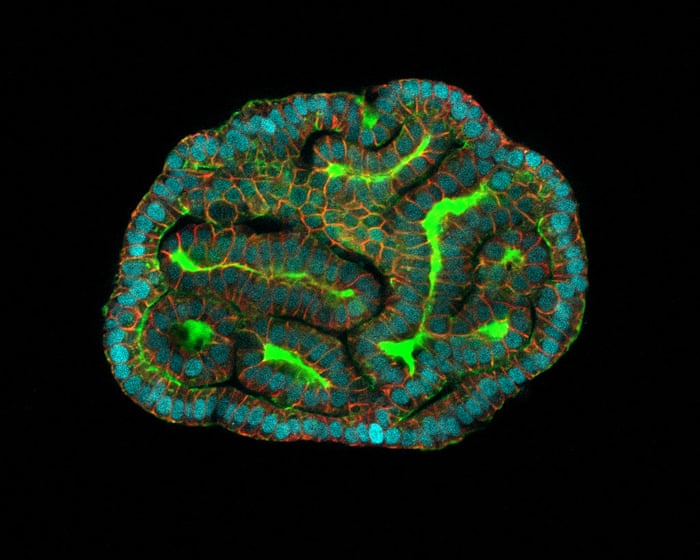
‘A mouse can’t tell us what works’: UK scientists to grow miniature human organs for drug testing
Summary
UK scientists are growing tiny human organs, called organoids, from patients’ cells to test new drugs. This method aims to reduce animal testing and improve how medicines are developed by using human tissue models that better show how diseases work and respond to treatments.Key Facts
- Scientists will grow miniature human organs from NHS patients’ cells to test medicines.
- Organoids are tiny tissue clumps that can mimic real organs and show disease effects.
- The approach will help find which treatments work best for different patients.
- Animal testing has a high failure rate, with over 90% of drugs passing animal tests failing in humans.
- The new research hub in Cambridge is funded with £20 million by the Medical Research Council.
- The UK government plans to reduce animal testing using new methods like organoids and technology such as artificial intelligence.
- Last year, the UK performed 2.54 million animal testing procedures, mostly on mice, rats, fish, and birds.
- Initial research will focus on diseases like ulcerative colitis, Crohn’s disease, cancer, and neurological disorders.
Read the Full Article
This is a fact-based summary from The Actual News. Click below to read the complete story directly from the original source.