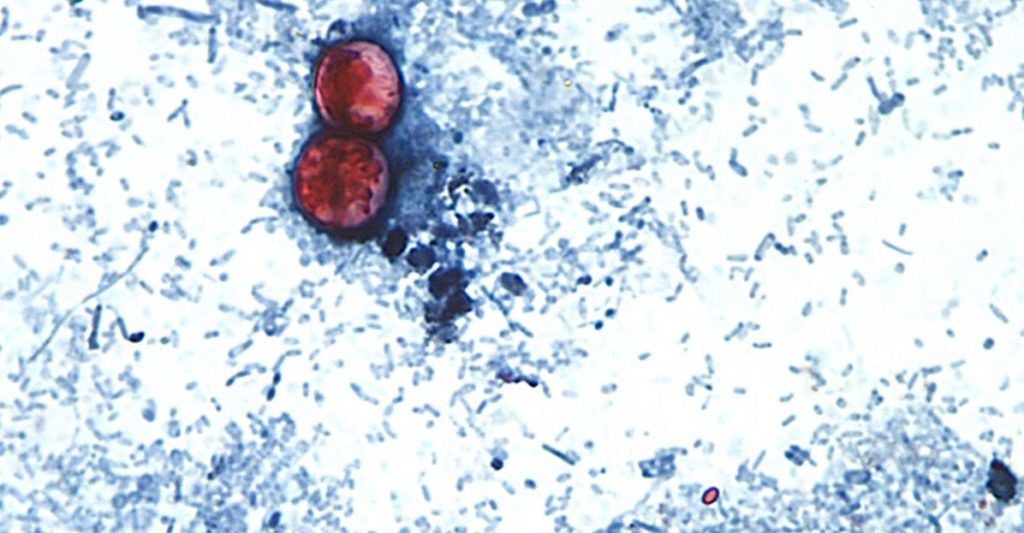
Cyclospora spreads through human waste — so how did it get on food?
Summary
Cyclospora, a parasite that causes severe diarrhea, spreads when human waste contaminates food and water. Sewage systems often release treated water that may still contain the parasite’s eggs, which can infect crops and people, creating a cycle of infection.Key Facts
- Cyclospora only lives in humans and multiplies in the intestines.
- The parasite releases eggs, called oocysts, into human feces.
- Sewage treatment doesn’t always remove or kill these oocysts before water is reused.
- Oocysts mature in about a week when exposed to warm temperatures.
- People get sick by eating food or drinking water contaminated with mature oocysts.
- The largest U.S. outbreak has sickened over 22,000 people and caused two deaths in Michigan.
- Monitoring sewage helps track disease levels and test how well sewage treatment removes the parasite.
- Detecting low levels of cyclospora in sewage and food remains difficult with current methods.
Read the Full Article
This is a fact-based summary from The Actual News. Click below to read the complete story directly from the original source.