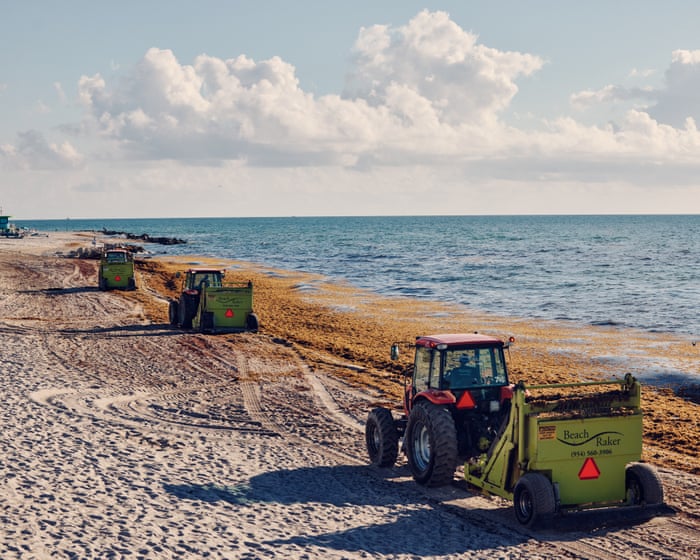
‘A new normal’: Miami faces worsening seaweed problem as piles of algae wash up on beaches
Summary
Miami-Dade County is facing an increasing problem with sargassum, a type of brown seaweed, washing up on its beaches. The county spends millions each year to clean the beaches while protecting sea turtle nests, and scientists link the rise in sargassum to factors like nutrient pollution, warmer waters, and climate change.Key Facts
- Chris Bumpus leads the team cleaning sargassum from 17 miles of Miami-Dade beaches during summer.
- In July alone, about 9,000 tons of sargassum were removed, the highest monthly total recorded.
- The county uses special permits to operate heavy equipment for cleaning, which cannot run during sea turtle nesting hours.
- Around 700 sea turtle nests have been recorded on Miami-Dade beaches this season.
- Miami-Dade spends $3 million annually on removing sargassum, the most of any Florida county.
- Since 2011, the Great Atlantic Sargassum Belt has appeared, stretching from West Africa to the Gulf of Mexico, with seaweed amounts doubling every five years.
- Scientists say river nutrients, warmer ocean temperatures, and ocean currents contribute to increased sargassum growth.
- Climate change causes more ocean warming and rainfall, which adds nutrients to the ocean and increases seaweed blooms.
Read the Full Article
This is a fact-based summary from The Actual News. Click below to read the complete story directly from the original source.