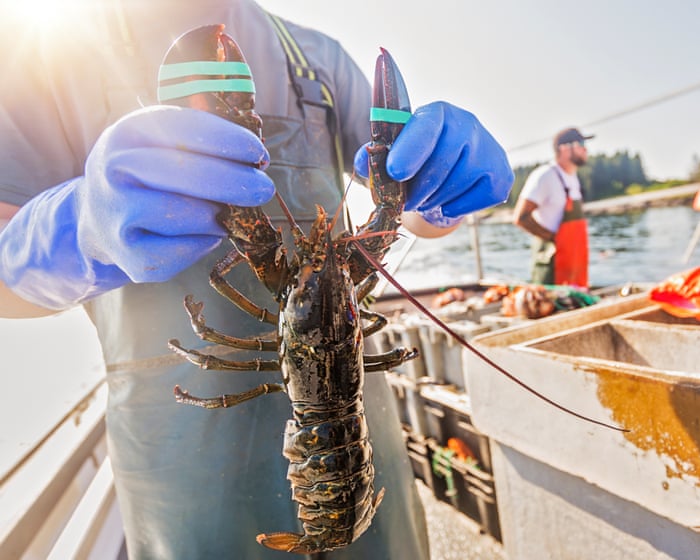
Lobsters and acidic seas: can shellfish help neutralise one of the greatest threats to the ocean?
Summary
Scientists and fishermen in the New England region are studying how warming oceans affect lobsters and other shellfish. Researchers are testing a method called ocean alkalinity enhancement, which involves adding alkaline substances to seawater to help it absorb more carbon dioxide and reduce ocean acidification.Key Facts
- The Gulf of Maine is warming faster than 99% of the world’s oceans.
- Lobster populations close to shore have declined over the past 15 years, forcing fishermen to go farther out to sea.
- Ocean carbon removal is a new idea to help fight climate change by making oceans absorb more carbon dioxide.
- Ocean alkalinity enhancement adds alkaline materials to seawater to increase its ability to absorb carbon.
- Scientists from Woods Hole Oceanographic Institution tested this by adding sodium hydroxide to the Gulf of Maine.
- Over £370 million has been invested worldwide in ocean carbon removal research and trials in the last five years.
- US federal support for ocean science research was cut after President Donald Trump announced funding reductions.
- The LOC-NESS program is one of the few remaining US projects working on ocean carbon removal.
Read the Full Article
This is a fact-based summary from The Actual News. Click below to read the complete story directly from the original source.