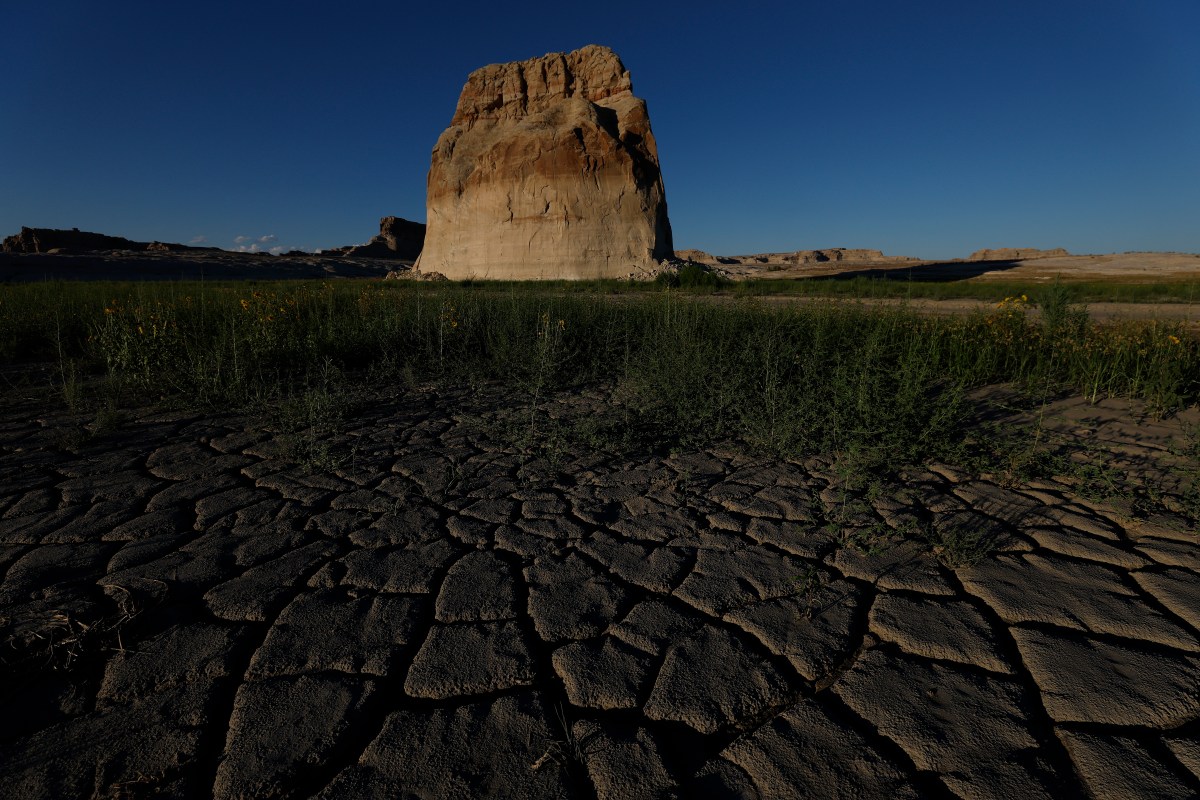
Scientists Warn Against 'Propping Up' Lake Powell as Levels Hit Record Low
Summary
Lake Powell has dropped to its lowest water level since it was created over 60 years ago, approaching a point where the Glen Canyon Dam can no longer produce hydropower normally. This decline is linked to climate change and lower Colorado River flows, affecting water supply for millions of people and raising concerns about how to manage Lakes Powell and Mead in the future.Key Facts
- Lake Powell's water level fell to about 3,520 feet above sea level in mid-August, close to a critical limit of 3,490 feet needed for hydropower generation.
- Lake Mead, another major reservoir on the Colorado River, also reached a record low recently.
- The Colorado River supplies water to about 40 million people, millions of acres of farmland, seven U.S. states, tribal nations, and Mexico.
- Climate change has caused roughly a 20% drop in river flows this century, with forecasts for further declines between 20% and 40%.
- If water levels drop too low, Glen Canyon Dam may have to stop using turbines and rely on less safe water outlets.
- Federal officials have tried releasing water from upstream reservoirs to keep Lake Powell above the danger level but may cause problems for Lake Mead.
- Some experts suggest making Lake Mead the main reservoir and Lake Powell a backup to better manage water storage long term.
- New guidelines for managing these reservoirs after 2026 are under review to address these challenges.
Read the Full Article
This is a fact-based summary from The Actual News. Click below to read the complete story directly from the original source.