Calls for 'Immediate Action' Over Lake Powell, Lake Mead Water Use
Summary
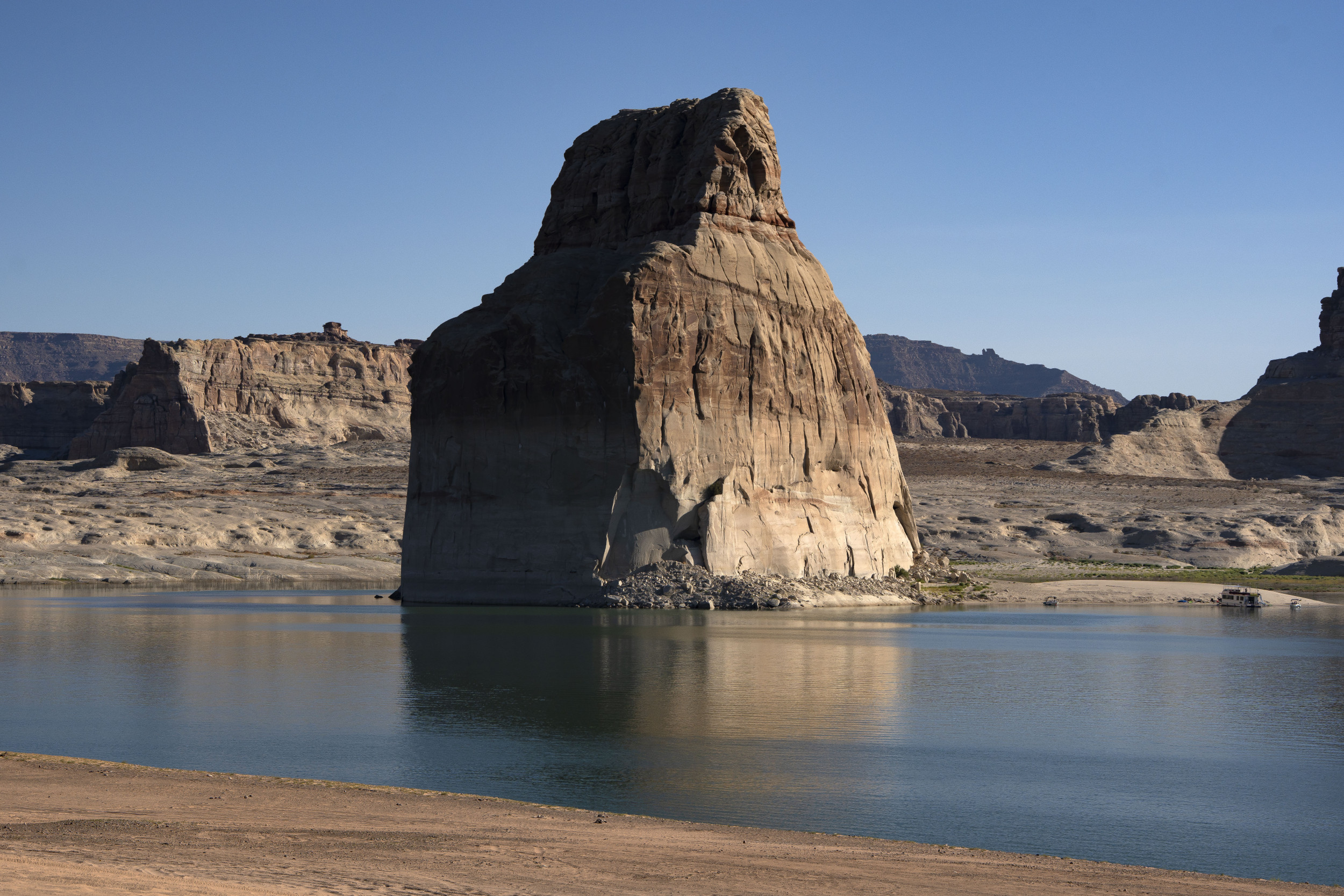
Water levels in Lake Powell and Lake Mead are critically low, raising concerns about water and energy supplies in the Colorado River system. Researchers warn that overuse and dry conditions could further deplete these reservoirs, affecting millions of people. New water usage agreements are planned, but they might not prevent a worsening crisis.Key Facts
- Lake Powell and Lake Mead are at about 30% capacity.
- A new study suggests the Colorado River Basin could use 3.6 million acre-feet more water than it receives next year.
- Low water levels may stop hydropower generation at Hoover and Glen Canyon dams.
- Lake Powell can't generate power if it falls below 3,500 feet, and Lake Mead's turbines won't work below 1,035 feet.
- If reservoirs drop further, 40 million people's water supply could be at risk.
- Current agreements reduce water for Arizona and Nevada but not for California.
- Reservoir inflows are expected to be 9.3 million acre-feet next year, less than the 12.9 million needed.
- A new water usage agreement is in negotiation to take effect after 2026.
Read the Full Article
This is a fact-based summary from The Actual News. Click below to read the complete story directly from the original source.