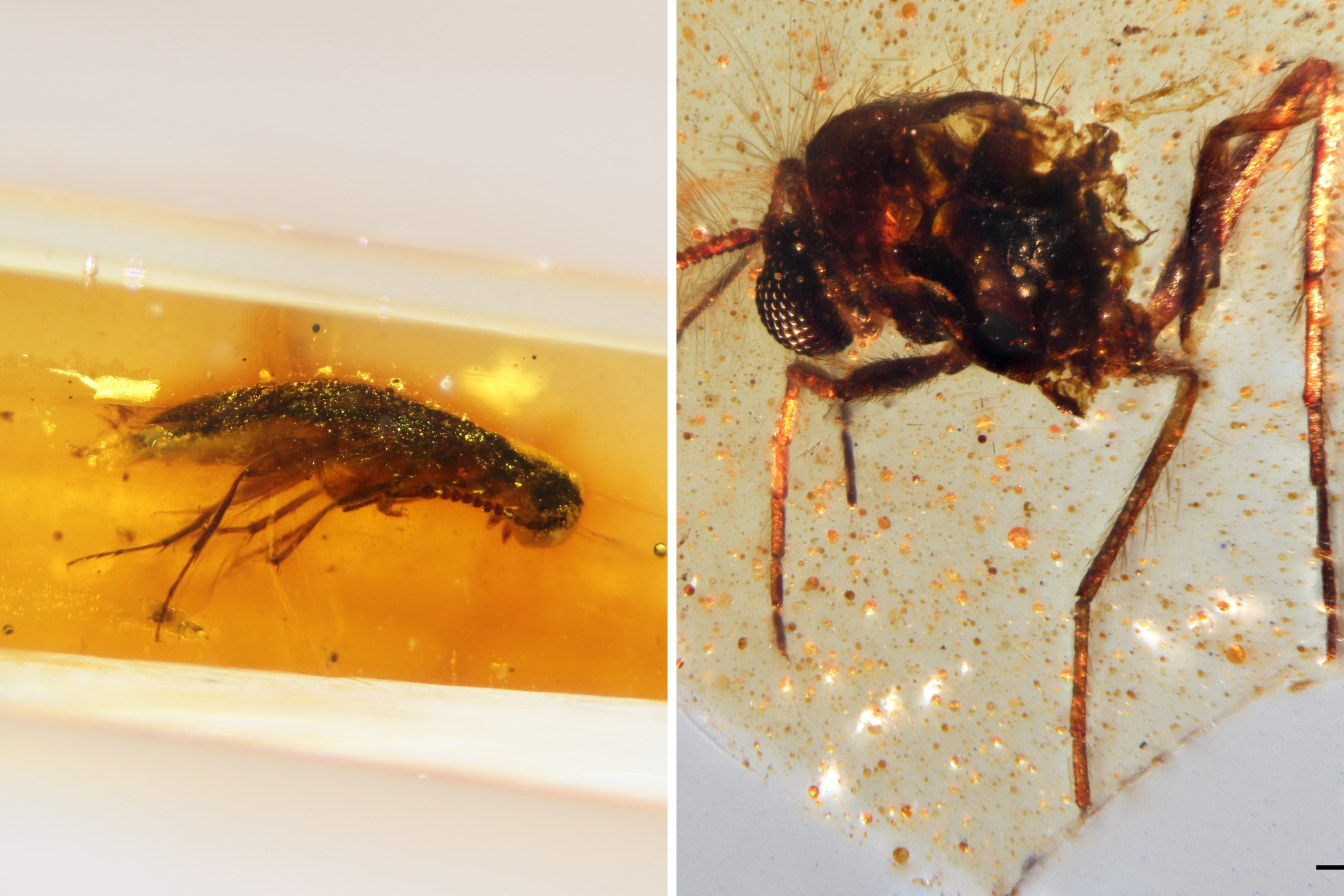
South American Amber Discovery Opens Window to 112-Million-Year-Old Forest
Summary
Scientists found 112-million-year-old amber in Ecuador that contains ancient insects and plant pieces. This discovery gives information about the environment and life during the Cretaceous period when South America was part of the supercontinent Gondwana. The amber reveals details about the types of trees and ancient ecosystem in that prehistoric forest.Key Facts
- Scientists found multiple pieces of insect-bearing amber in Ecuador, dating back 112 million years.
- The amber comes from a time when South America was part of the supercontinent Gondwana.
- Fossils in the amber include insects like flies, beetles, ants, and wasps, as well as plant remains.
- Two types of amber were discovered: one from underground tree roots and another from resin exposed to air.
- The findings indicate that the ancient forest was moist, dense, and filled with resin-producing trees.
- This discovery is important because most fossil amber previously known was from the Northern Hemisphere.
- The study points to a moderately diverse forest ecosystem with early flowering plants, known as angiosperms.
Read the Full Article
This is a fact-based summary from The Actual News. Click below to read the complete story directly from the original source.