Satellite Images Reveal New Island in Alaska National Park
Summary
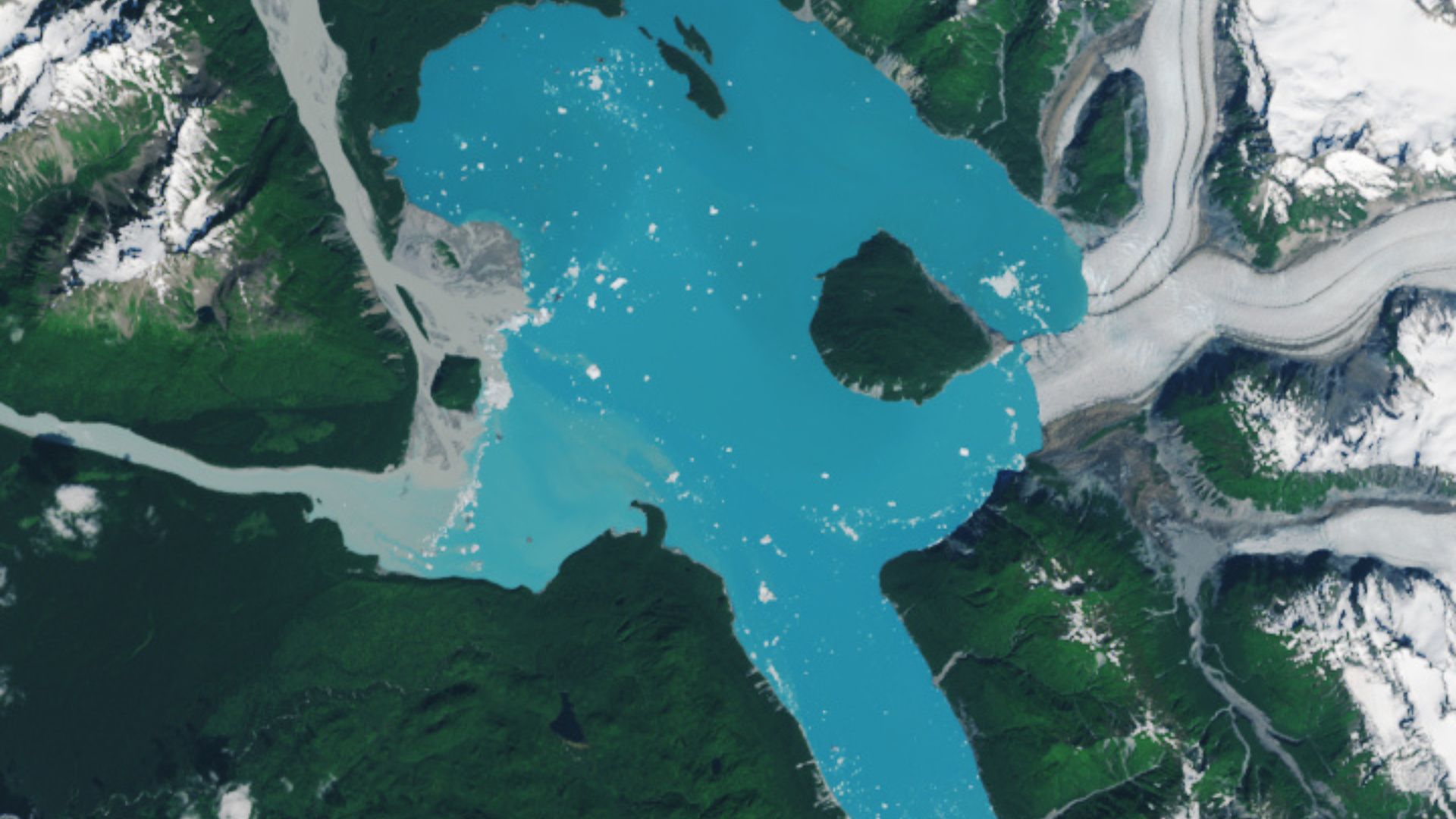
Satellite images have shown that a new island formed in Alaska's Glacier Bay National Park when the Alsek Glacier melted and separated from Prow Knob mountain. Scientists are concerned about the rapid melting of glaciers because it can lead to rising sea levels and pose a threat to coastal areas. The melting rate of glaciers in Alaska is now much faster than in the past.Key Facts
- A new island formed in Alaska's Glacier Bay National Park as the Alsek Glacier melted away from Prow Knob.
- NASA satellite images have tracked changes in the area since 1984.
- The glacier's melting has expanded Alsek Lake from 45 to 75 square kilometers since 1984.
- Glacier melting contributes to rising sea levels, which can threaten coastal regions.
- Glaciers in Alaska are melting twice as fast now as they were between 1960 and 2004.
- The state's temperature is increasing two to three times faster than the global average.
- The melting glacier is less stable and more prone to calving, where ice breaks off.
- Experts warn that the changes may lead to new hazards, such as outburst floods.
Read the Full Article
This is a fact-based summary from The Actual News. Click below to read the complete story directly from the original source.