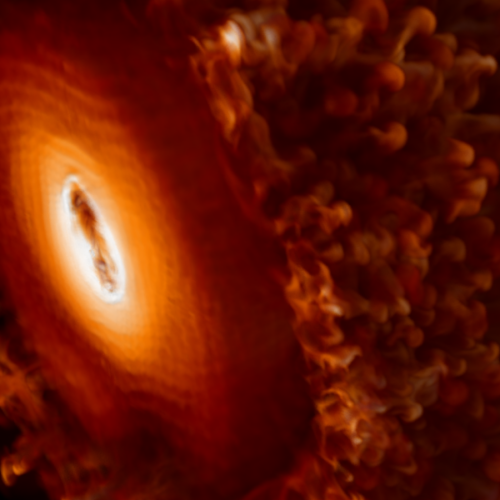
What happens when neutrinos swap identities inside a supernova?
Summary
Large stars end their lives in explosions called supernovae, creating neutron stars or black holes. A new study suggests that neutrinos—tiny particles that can change their type or "flavor"—may explain why some supernova models don’t match what scientists observe in space.Key Facts
- Supernovae happen when massive stars run out of fuel and collapse under gravity.
- The explosion throws off most of the star’s outer layers, leaving behind a dense object like a neutron star or black hole.
- Current models of supernovae rely heavily on neutrinos, particles produced in huge amounts during the collapse.
- Neutrinos have the ability to change "flavor," meaning they can switch identities among three types.
- This flavor-changing feature is not yet fully included in supernova models.
- Observations show fewer supernovae than expected based on how many big stars form.
- Some types of big stars, like red supergiants, seem to explode less often than predicted.
- A better understanding of neutrino behavior might help explain these differences and improve supernova models.
Read the Full Article
This is a fact-based summary from The Actual News. Click below to read the complete story directly from the original source.