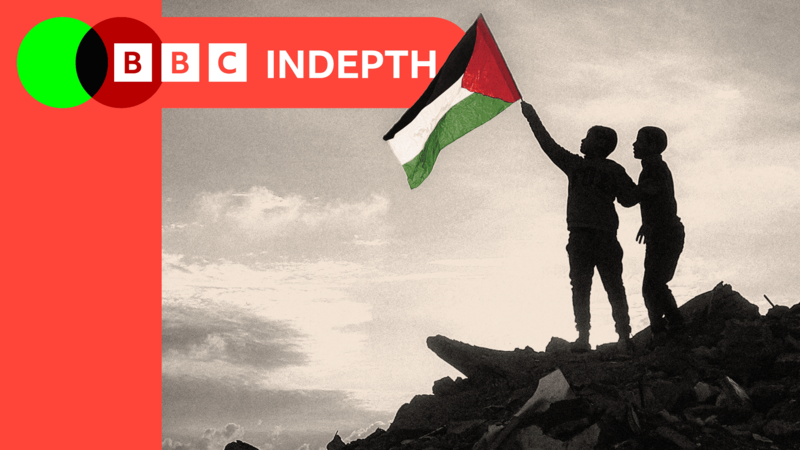
Recognising Palestinian statehood opens another question - who would lead it?
Summary
Several countries, including the UK, Canada, and Australia, have announced their intention to recognize Palestinian statehood at the United Nations. This decision raises questions about who would lead such a state, given the division of leadership between the Palestinian Authority in the West Bank and Hamas in Gaza. The recognition adds to the ongoing debate about what defines a state, considering the lack of clear borders and unified governance for Palestine.Key Facts
- The UK, Canada, and Australia have decided to recognize a Palestinian state at the United Nations.
- More than 150 countries had already recognized Palestine before these countries joined.
- The Montevideo Convention lists four criteria for statehood, of which Palestine meets two: permanent population and the ability to engage in international relations.
- There is no defined territory for Palestine due to ongoing conflicts and lack of established borders.
- The Palestinian territories include East Jerusalem, the West Bank, and the Gaza Strip, areas occupied by Israel since 1967.
- The Palestinian Authority (PA) administers parts of the West Bank, but not Gaza.
- Hamas controls Gaza, and this division has led to two separate Palestinian governments.
- Leadership and governance remain significant challenges for the potential Palestinian state.
Read the Full Article
This is a fact-based summary from The Actual News. Click below to read the complete story directly from the original source.