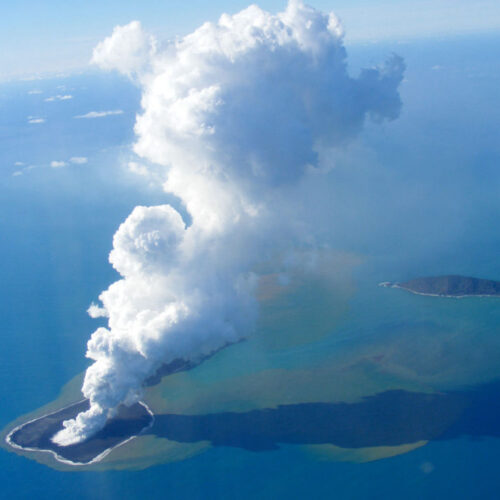
Small undersea volcanoes may unleash outsized tsunamis
Summary
Scientists studied the 2022 underwater eruption of Hunga volcano in Tonga and found that the sudden sinking of the volcano’s caldera (a large crater) may have caused an unusually large tsunami. This suggests that even small underwater volcanoes can create dangerous tsunamis when their calderas collapse quickly.Key Facts
- The 1883 eruption of Krakatau in Indonesia caused a deadly tsunami that killed over 30,000 people.
- Underwater volcanic eruptions can behave differently than those on land due to water pressure and interaction with seawater.
- The 2022 Hunga eruption produced a tsunami up to 40 meters high, the largest recorded from an underwater volcanic eruption.
- Hunga’s caldera is about 4 kilometers wide but unusually deep for its size.
- During the eruption, the caldera sank about 1 kilometer rapidly, which likely caused the large tsunami by displacing a lot of seawater quickly.
- The magma reservoir roof under Hunga was thin and broad, causing it to collapse after magma drained.
- Scientists compared seafloor maps from before and after the eruption to study the changes.
- Researchers say they still do not fully understand how submarine volcanos cause tsunamis because it is hard to study underwater eruptions up close.
Read the Full Article
This is a fact-based summary from The Actual News. Click below to read the complete story directly from the original source.