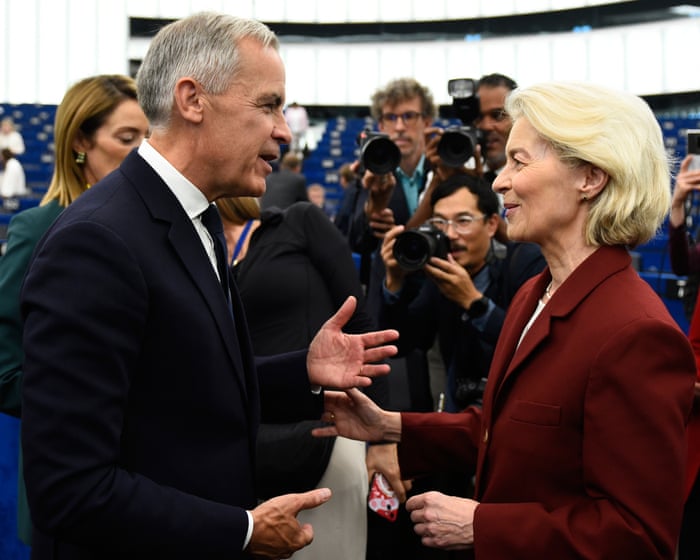
The EU’s Canada offer is more mood than reality but it could hint at a future geometry for the bloc
Summary
The European Commission president suggested Canada could become the first "associate member" of the EU, meaning closer cooperation without full membership. While Canada and the EU share many goals, such a membership does not formally exist and would require major treaty changes. The idea reflects efforts to build stronger ties amid global uncertainties and challenges with the U.S. under President Trump.Key Facts
- The EU and Canada share similar views on issues like climate change, AI, and the Ukraine war.
- EU President Ursula von der Leyen proposed Canada become an "associate member" of the EU.
- Canada’s Prime Minister supported the idea of close cooperation with the EU.
- "Associate membership" is not an official status in EU treaties and would require complex treaty reforms.
- Existing EU agreements with non-members (like Ukraine) are steps toward full EU membership, which Canada cannot seek due to geography.
- Some non-EU countries (Norway, Switzerland) have close ties with the EU through the European Economic Area or European Free Trade Association.
- The proposal aims to create a new form of partnership focusing on cooperation in trade, defense, and scientific programs without full EU membership.
- This closer alliance is partly motivated by Canadian concerns over trade tensions and unpredictable policies from the U.S. under President Trump.
Read the Full Article
This is a fact-based summary from The Actual News. Click below to read the complete story directly from the original source.