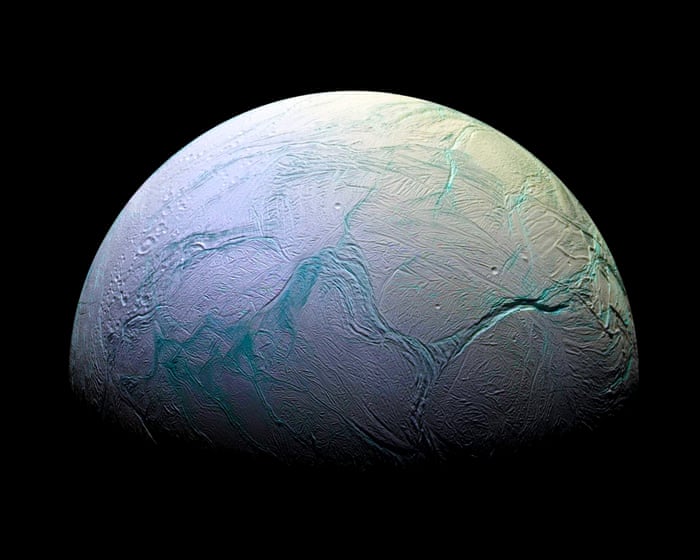
Earth microbes survive simulated conditions of Saturn moon’s ocean
Summary
Scientists tested microbes from Earth’s deep ocean to see if they could live in conditions like those on Enceladus, one of Saturn’s moons. The microbes survived in a lab-made liquid that copied the salty, icy ocean beneath Enceladus’s surface, suggesting life might be possible on this distant moon.Key Facts
- Enceladus is a moon of Saturn with a hidden salty ocean beneath its icy shell.
- Scientists recreated Enceladus’s ocean conditions in a laboratory, including its chemical mix and high alkalinity (pH of 11).
- Microbes called methanogens, found near hydrothermal vents in Earth’s ocean, survived and adapted in this simulated environment.
- These microbes produce methane by using hydrogen and carbon dioxide, a process that could also happen on Enceladus.
- The experiment lasted only days, so it is unclear if life could persist for longer periods on the moon.
- NASA’s Cassini mission found water plumes and organic molecules on Enceladus, supporting the idea of a possible habitat.
- Enceladus is about 300 miles wide and has one of the most promising locations for finding life beyond Earth.
- This research helps remove doubts about whether simple life forms could exist in the harsh ocean of Enceladus.
Read the Full Article
This is a fact-based summary from The Actual News. Click below to read the complete story directly from the original source.