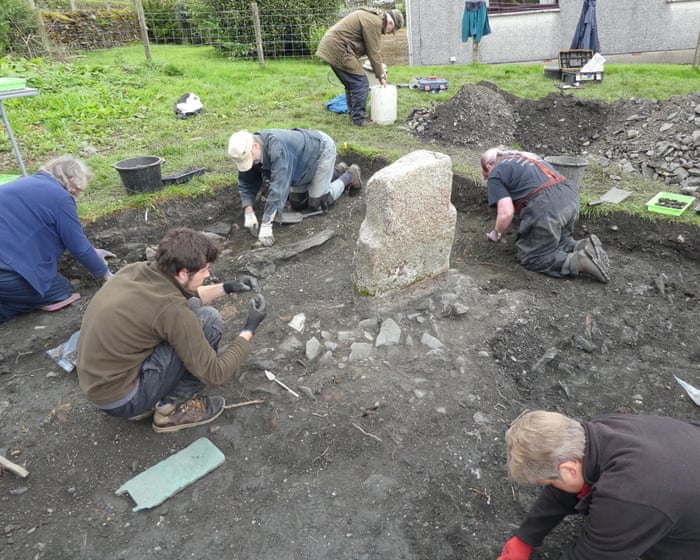
‘Hugely exciting’ finds on tiny Scottish island shed light on spread of Christianity
Summary
Archaeologists and local volunteers on the small Scottish island of Lismore found important signs of an early Christian monastery from the sixth century. Their discoveries include burial grounds, decorated stones, early buildings, and tools used to make gold and silver jewelry, showing that the site was once a major religious center.Key Facts
- Lismore is a small Scottish island with about 190 people and no shops or pubs.
- The island was home to a monastery founded in the sixth century AD by missionaries spreading Christianity from Ireland.
- Before this excavation, only a few pieces of early carved crosses were known from the site.
- Local volunteers raised money and worked with archaeologist Dr Clare Ellis to dig at a medieval cathedral site.
- They found burial grounds, decorated stonework, early buildings, and many crucibles (small melting pots) used for casting gold and silver.
- The monastery, named Lios Mór after Saint Mo Luóc, was an important international Christian site, similar to the famous Iona monastery.
- The discovery included evidence of high-status craftwork, such as jewelry making in the seventh century.
- Experts say this find changes the understanding of Christian history in northern Britain and highlights local community involvement in archaeology.
Read the Full Article
This is a fact-based summary from The Actual News. Click below to read the complete story directly from the original source.