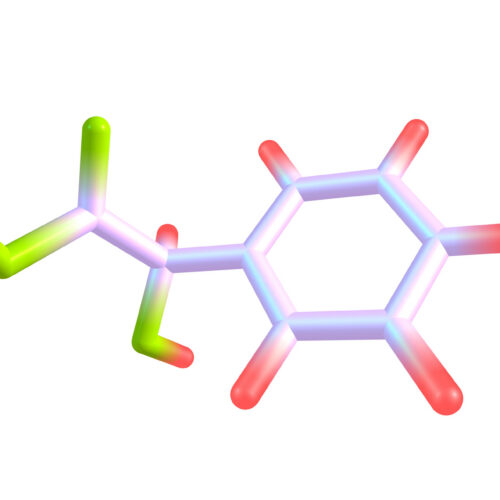
Chemistry Nobel goes to reactions like those that gave life a hand
Summary
The 2023 Nobel Prize in Chemistry was awarded to Henri Kagan and Kenso Soai for discovering chemical reactions that favor producing one "handed" form of a molecule more than the mirror-image form. This finding helps explain how life on Earth uses molecules with a specific handedness, which is important because enzymes only work with one form.Key Facts
- Molecules can have "handedness," meaning they come in left- and right-handed forms (called chirality).
- Life only uses one chiral form of many key molecules, like sugars and amino acids.
- Enzymes, which speed up chemical reactions in organisms, usually work only with molecules of the correct handedness.
- Kagan and Soai found reactions that produce more of one chiral form than the other, instead of an equal mix.
- This research helps explain how life started with molecules of a single handedness.
- The discovery supports theories about how chiral molecules became dominant in living organisms.
- Understanding chirality is important for studying the origin of life and biochemistry.
- The Nobel Prize Committee noted earlier theories suggesting how small preferences in reactions could lead to dominance of one chiral form.
Read the Full Article
This is a fact-based summary from The Actual News. Click below to read the complete story directly from the original source.