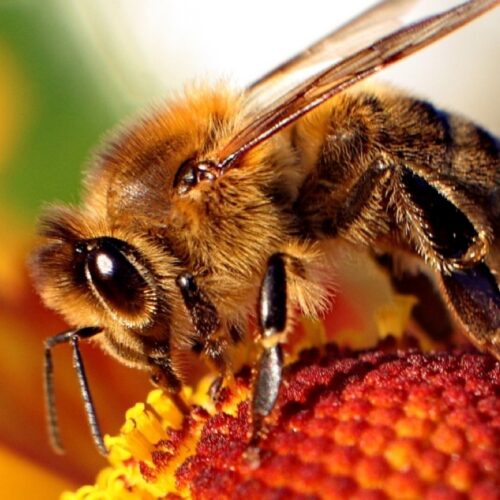
High-speed video reveals how honey bee stingers pump venom
Summary
Scientists studied how honey bee stingers pump venom after the bee flies away. They found that the stinger uses two sliding parts that work like pistons to push venom continuously into the target.Key Facts
- Honey bees leave their stingers in the skin after stinging and then fly away.
- The stinger keeps pumping venom on its own through a double-piston mechanism.
- The stinger has three parts: a chamber called a stylet and two sharp lancets that slide back and forth.
- Valves on each lancet change shape to create pressure and pump venom continuously.
- Researchers filmed stingers inserted in gel using high-speed video and microscopes to see these movements.
- They made a 3D-printed model that copied the stinger’s pumping to confirm their findings.
- Future studies will look at the material features of the stinger valves and the possible role of capillary action (liquid movement in small spaces).
Read the Full Article
This is a fact-based summary from The Actual News. Click below to read the complete story directly from the original source.