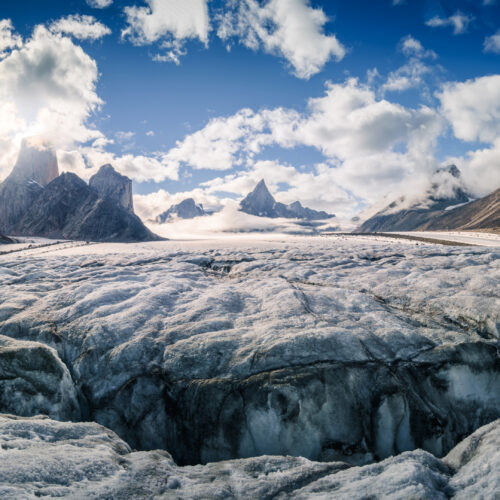
Ice sheet expansion may have started 2,000 years ago, but we canceled that
Summary
Scientists studied the Barnes Ice Cap, the last part of a large ice sheet in Canada, and found it began growing again about 2,000 years ago after shrinking. This ice growth continued until around 1960, when human-caused warming started to melt the ice again.Key Facts
- The Barnes Ice Cap is a small part of the Laurentide Ice Sheet that once covered much of Canada.
- The Laurentide Ice Sheet was about two miles thick at its peak.
- It shrank to its smallest size about 3,600 years ago.
- Around 2,000 years ago, the ice sheet began to grow again, signaling the start of a new ice age.
- This ice growth continued until about 1960.
- The ice is "cold-based," meaning it is frozen to the ground and preserves plants and rocks beneath it.
- Scientists used two methods to date ice changes: measuring beryllium-10 on rocks and radiocarbon dating dead plants trapped in the ice.
- The recent ice growth included a big pulse around 1800 CE, linked to the Little Ice Age, a cooler period in recent history.
Read the Full Article
This is a fact-based summary from The Actual News. Click below to read the complete story directly from the original source.